Chest pain is one of the most common reasons patients seek medical attention. However, not every instance of chest pain points to a cardiac emergency. Correctly identifying and coding chest pain in medical documentation is critical for accurate diagnosis, treatment, and reimbursement. That’s where the chest pain ICD 10 code becomes essential for healthcare professionals and medical coders.
This detailed guide explains how to use the ICD 10 code for chest pain, including related variations like rib pain ICD 10, pleuritic chest pain ICD 10, and chest wall pain ICD 10. Whether you’re a physician, biller, or coder, understanding these codes ensures compliance, accuracy, and better clinical outcomes.
What is the Chest Pain ICD 10 Category?
The ICD-10-CM coding system classifies chest pain under R07, which falls within the range of symptoms involving the circulatory and respiratory systems. The primary ICD 10 chest pain code, R07.9, is used when the cause of the pain is unspecified.
- R07.9 – Chest Pain, Unspecified
This is the r07.9 diagnosis code most frequently used when the exact cause of chest pain isn’t identified. It’s also referred to as chest pain unspecified ICD 10 or simply ICD 10 code for chest pain unspecified.
When the physician identifies a more specific origin of pain, such as chest wall, pleuritic, or substernal pain, other subcodes under R07 should be used.
Breakdown of Common ICD-10 Codes for Chest Pain
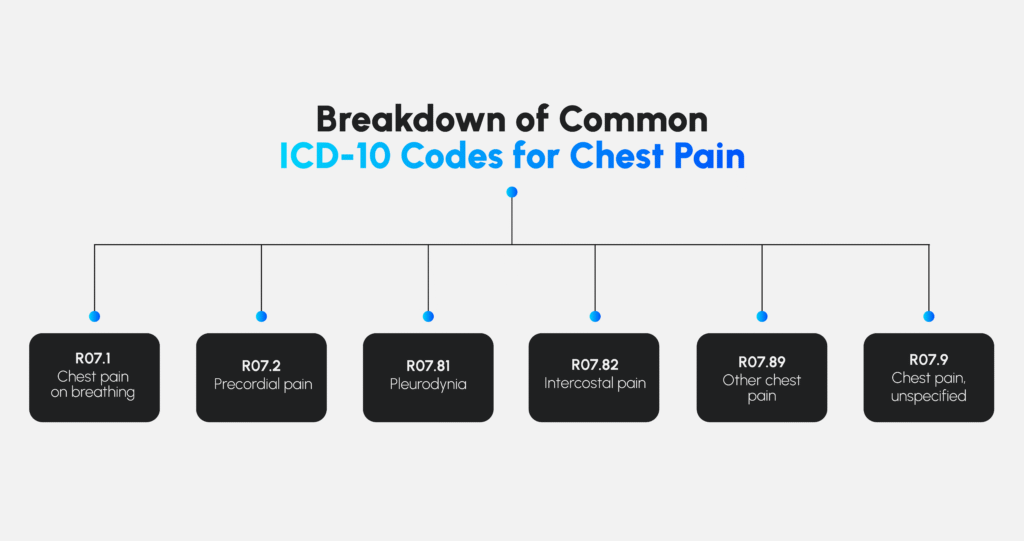
Here are the most frequently used codes within the R07 series:
- R07.1 – Chest pain on breathing
- R07.2 – Precordial pain (commonly known as precordial pain ICD 10)
- R07.81 – Pleurodynia
- R07.82 – Intercostal pain
- R07.89 – Other chest pain (used for pleuritic chest pain ICD 10, chest wall pain ICD 10, sternal pain ICD 10, or chest discomfort ICD 10)
- R07.9 – Chest pain, unspecified
Each variation helps coders and clinicians describe the exact type and source of pain more accurately.
R07.9 ICD 10 – Chest Pain, Unspecified
The r07.9 ICD 10 code is used when chest pain is present but no further clinical information is available. This may occur during initial visits, emergency room evaluations, or while awaiting diagnostic results.
Physicians should document the nature of the pain as precisely as possible to allow for more specific coding later. Using ICD 10 for chest pain unspecified should be temporary and updated once the underlying cause is determined.
ICD 10 Code for Specific Types of Chest Pain
Chest pain can originate from muscles, bones, nerves, or internal organs. The ICD 10 chest pain classification allows coders to distinguish between these causes.
1. Atypical Chest Pain (R07.89)
When symptoms don’t fit the typical pattern of angina or cardiac-related pain, use atypical chest pain ICD 10 or ICD 10 code for atypical chest pain. This falls under R07.89 – Other chest pain.
This code also applies to cases documented as intermittent chest pain ICD 10 or chest heaviness ICD 10.
2. Pleuritic Chest Pain (R07.89)
For pain resulting from pleuritis or inflammation of the pleura, the correct code is pleuritic chest pain ICD 10 or ICD 10 code for pleuritic chest pain. The pain typically worsens during deep breathing or coughing.
3. Chest Wall Pain (R07.89)
Pain originating from muscles or ribs—often due to trauma or strain—should be coded as chest wall pain ICD 10 or ICD 10 code for chest wall pain. This may overlap with musculoskeletal chest pain ICD 10 or ICD 10 chest wall pain.
4. Rib Pain (R07.81)
Localized rib tenderness or injury is captured with rib pain ICD 10 or ICD 10 code for rib pain. Coders may also use ICD 10 code for thoracic pain if the pain extends across the upper thorax.
5. Substernal and Midsternal Pain (R07.2 / R07.89)
For mid-chest or behind-the-breastbone pain, use substernal chest pain ICD 10, midsternal chest pain ICD 10, or sternum pain ICD 10, depending on documentation. These codes help differentiate cardiac vs. musculoskeletal origins.
6. Chest Tightness and Pressure (R07.89)
When a patient reports chest tightness ICD 10, chest pressure ICD 10, or ICD 10 chest tightness, it usually falls under R07.89 – Other chest pain, unless a more specific cause is identified.
ICD 10 Code for Costochondritis
A common non-cardiac cause of chest wall pain is costochondritis, an inflammation of the cartilage connecting the ribs to the sternum. The correct code is M94.0 – Chondrocostal junction syndrome (Tietze’s syndrome), often used alongside ICD 10 code for costochondritis or sternal pain ICD 10 when documentation specifies inflammation.
When to Use “Chest Pain Unspecified ICD 10” (R07.9)
The chest pain ICD 10 code R07.9 should be reserved for cases where:
- The physician cannot yet determine a cause
- The patient’s symptoms are vague or non-specific
- Initial evaluation is pending further tests
Using ICD 10 code for chest pain unspecified ensures claims are not delayed but must later be updated once more information becomes available.
Documentation Tips for Accurate ICD-10 Chest Pain Coding
Accurate documentation is key to correct use of the ICD 10 code chest pain. Here’s what providers should include:
- Location: Substernal, left-sided, right-sided, or diffuse.
- Character: Sharp, dull, burning, tightness, or heaviness.
- Duration and Onset: Acute or chronic; intermittent or constant.
- Aggravating Factors: Movement, breathing, exertion, or rest.
- Associated Symptoms: Shortness of breath, nausea, or sweating.
This level of detail helps determine whether to use acute chest pain ICD 10, precordial pain ICD 10, or another specific variant.
Common Mistakes in Chest Pain Coding
Even experienced coders can make errors when assigning ICD 10 chest pain codes. Avoid the following pitfalls:
- Overusing unspecified codes like R07.9 ICD 10 when a more specific diagnosis is available.
- Ignoring secondary causes such as costochondritis, pleurisy, or musculoskeletal pain.
- Confusing cardiac vs. non-cardiac pain, which can affect medical necessity documentation.
Proper differentiation ensures accurate claims and supports better clinical decision-making.
Examples of Correct Coding Scenarios
Clinical Scenario |
Correct ICD-10 Code |
| Patient presents with unspecified chest pain | R07.9 – Chest pain, unspecified |
| Pain localized to the chest wall | R07.89 – Other chest pain |
| Rib tenderness after trauma | R07.81 – Rib pain |
| Pleuritic pain due to pneumonia | R07.89 – Other chest pain |
| Pain behind the sternum | R07.2 – Precordial pain |
| Chest tightness without clear etiology | R07.89 – Other chest pain |
Each scenario demonstrates how specificity improves both coding accuracy and clinical interpretation.
Relation Between ICD-10 Chest Pain and Reimbursement
Inaccurate use of ICD 10 code for chest pain can lead to claim denials or audits. Properly distinguishing between chest wall pain ICD 10, chest discomfort ICD 10, and pleuritic chest pain ICD 10 ensures payers understand the underlying medical necessity.
Note: For billing purposes, always verify the most recent CMS guidelines and code updates.
ICD 10 Code for Thoracic and Musculoskeletal Pain
When the source of pain extends beyond the chest area:
- ICD 10 code for thoracic pain can be used to describe upper back or side pain.
- Musculoskeletal chest pain ICD 10 applies when the pain is due to muscle strain, injury, or posture-related causes.
These codes support better differentiation from cardiac pain and prevent miscoding.
Accurate ICD-10 Coding Improves Patient Outcomes
Accurate use of chest pain ICD 10 codes not only impacts billing but also helps improve patient outcomes through precise documentation. From R07.9 chest pain unspecified to R07.89 other chest pain, each variation provides valuable diagnostic insight.
Understanding distinctions between ICD 10 code for chest wall pain, ICD 10 code for rib pain, and ICD 10 code for chest tightness ensures clinicians and coders work hand in hand toward error-free reporting.
Whether documenting acute chest pain ICD 10, chest pressure ICD 10, or atypical chest pain ICD 10, accuracy and attention to detail remain the foundation of compliant medical coding.
If you are a medical professional unsure about which code to use or have a short time at hand, reach out to our medical billing team at Liberty Liens. Our Experts work with accuracy and strive till every cent you owe is paid.