Hyperlipidemia ICD-10 affects multiple organ systems due to high cholesterol and triglyceride levels, which contribute to vascular and metabolic complications throughout the body. As a result, it is routinely documented across primary care, cardiology, endocrinology, emergency medicine, and many other specialties. Because hyperlipidemia is both common and often clinically silent, accurate diagnosis, documentation, and appropriate ICD-10 coding are essential for better patient care and proper reimbursement.
This guide breaks down what hyperlipidemia is, why correct ICD-10 coding matters, and how E78.5 fits into everyday clinical practice.
What is Hyperlipidemia?
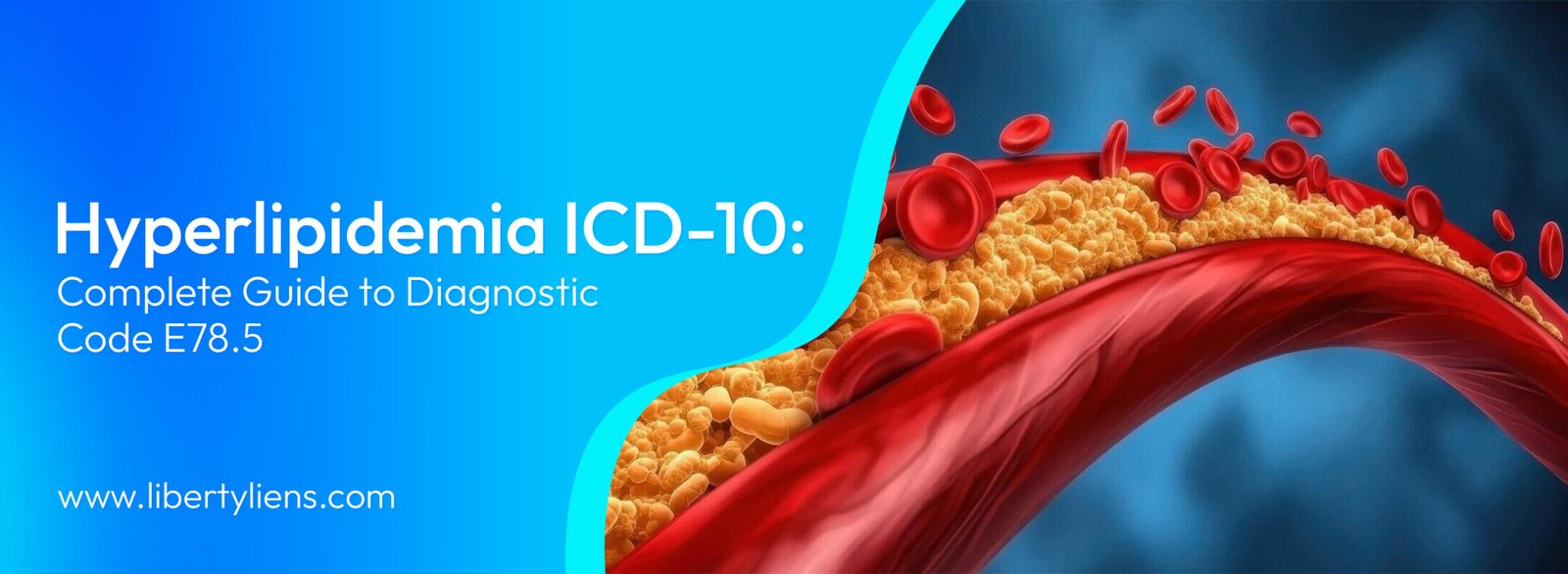
Hyperlipidemia simply means a patient has elevated lipids, either cholesterol, triglycerides, or both. These aren’t harmful in normal amounts, but when they rise too high, they start contributing to plaque buildup inside artery walls. Over time, this leads to cardiovascular risks such as coronary artery disease, heart attacks, and strokes.
Symptoms of Hyperlipidemia
Since most patients don’t feel symptoms, it’s often lab work that brings hyperlipidemia to light. That’s why providers, medical billing teams, and even patients need a clear understanding of the condition and the correct hyperlipidemia ICD-10 codes.
Causes of Hyperlipidemia
Hyperlipidemia doesn’t always have one clear cause. For many patients, it’s a mix of genetics, lifestyle, and associated conditions. Common causes include:
1. Lifestyle Factors
- High intake of saturated or trans fats
- Sedentary lifestyle
- Smoking
- Excessive alcohol intake
- Obesity or increased abdominal fat
2. Medical Conditions
- Type 2 diabetes
- Hypothyroidism
- Polycystic ovary syndrome (PCOS)
- Liver or kidney disorders
- Metabolic syndrome
3. Genetics
Some people are born with inherited disorders such as:
- Familial Hypercholesterolemia (FH)
- Familial Combined Hyperlipidemia
- Familial Hypertriglyceridemia
These patients often required long-term monitoring and aggressive management.
Types of Hyperlipidemia and ICD-10 codes
Understanding the type helps determine treatment and the correct ICD-10 code for hyperlipidemia.
1. Hypercholesterolemia
- High level of LDL or bad cholesterol.
- ICD-10 code for hypercholesterolemia is E78.00.
2. Hypertriglyceridemia
- High level of triglycerides in the blood.
- ICD-10 code for hypertriglyceridemia is E78.1.
3. Mixed Hyperlipidemia
- Both cholesterol and triglyceride levels are high in the blood.
- ICD-10 code for mixed hyperlipidemia is E78.2
4. Hyperlipidemia, Unspecified
- Lipids are elevated, but documentation does not specify which type
- ICD-10 code for hyperlipidemia, unspecified, is E78.5
5. Other and Secondary Forms
These may include:
- Lipoprotein abnormalities (E78.6)
These involve structural or functional issues in the particles that carry cholesterol and triglycerides. They can be genetic or acquired and often lead to mixed lipid problems. Such abnormalities may increase cardiovascular risk.
- Secondary dyslipidemia
This form develops due to another medical condition rather than genetics. Common triggers include diabetes, obesity, thyroid disorders, and certain medications. Treating the underlying issue usually improves lipid levels.
If you want to read more about hypothyroidism, click here.
Difference Between Dyslipidemia and Hyperlipidemia
Although people often use dyslipidemia and hyperlipidemia as if they mean the same thing, they are not identical. Here’s a quick comparison:
| Hyperlipidemia | Dyslipidemia |
| A specific type of dyslipidemia where only the lipid levels are high, usually high cholesterol or high triglycerides | Dyslipidemia is a broad term for any abnormal blood lipid level. It includes high LDL, high total cholesterol, high triglycerides, or low HDL. It’s essentially an umbrella term for mixed or unspecified lipid disorders |
| Cover only high levels of lipid disorders | Cover both high and low levels of lipid abnormalities. |
| Health professionals use it when the issue is specifically elevated lipids. | Health professionals use it when there is a combination of abnormalities or when levels are low or high |
| Hyperlipidemia is typically coded as E78.5 (unspecified hyperlipidemia) | Dyslipidemia is also coded as E78.5, because ICD-10 groups most lipid disorders in the E78 category. |
If you want to read more about Dyslipidemias and related ICD-10 codes, click here
Diagnostic Code E78.5 (Hyperlipidemia, Unspecified)
The E78.5 diagnosis code, sometimes written as E785, dx code E78.5, or ICD-10 E78.5. It is used when a patient has hyperlipidemia, but the type isn’t clearly defined in the documents.
E78.5 Hyperlipidemia, unspecified applies when:
- Lab results show elevated lipids, but the note does not specify LDL, HDL, triglycerides, or mixed hyperlipidemia.
- The provider documents HLD, hyperlipidemia, or high lipids without further detail.
- The lipid abnormality is known, but the exact pattern hasn’t been determined yet.
This is a valid billing code, but because it’s broad, it’s usually better to document the specific lipid issue when possible.
How Hyperlipidemia ICD-10 Affects Patients’ Health
No matter which ICD-10 code is used, E78.5, E78.2, or E78.0. Hyperlipidemia has a significant impact on a patient’s cardiovascular health. An elevated LDL cholesterol or triglyceride contributes to plaque buildup inside the arteries, causing them to become stiff, narrow, and less able to carry blood efficiently. Over time, this increases the risk of:
- Heart attack
- Stroke
- Peripheral artery disease
- Pancreatitis
Hyperlipidemia often coexists with chronic conditions like diabetes, which may require combination coding, such as E11.69 with E78.5, to fully capture the patient’s risk profile. Clear, detailed documentation ensures accurate coding, supports risk adjustment, and improves long-term care planning for patients.
How to Diagnose Hyperlipidemia ICD-10
Hyperlipidemia is diagnosed with a simple blood test called a lipid profile that measures different types of lipids in your blood test including cholesterol and triglycerides. The lipid profile provides valuable insight about your cardiovascular health and risk factors.
Why ICD-10 Coding Matters?
An accurate ICD-10 coding isn’t just about medical billing. It ensures the continuity of care, supports medical necessity for labs and medication, and reduces claim denial. For chronic diseases like hyperlipidemia, precise documentation helps build a complete cardiovascular risk profile.
But here’s the challenge:
Hyperlipidemia can represent different conditions depending on the lipid abnormality. Cholesterol may be elevated, triglycerides may be the issue, or both can be affected. That’s why selecting the right ICD-10 code for hyperlipidemia is important.
Final Thought
Hyperlipidemia may be common, but the way we document and code it makes a real difference. E78.5 is the ICD-10 code for hyperlipidemia, unspecified, and it serves an important purpose, especially when details are limited. But when providers include a bit more specific details in the chart, it leads to stronger clinical documentation and cleaner billing.
For support with accurate coding and compliant reimbursement, Liberty Liens is here to help.