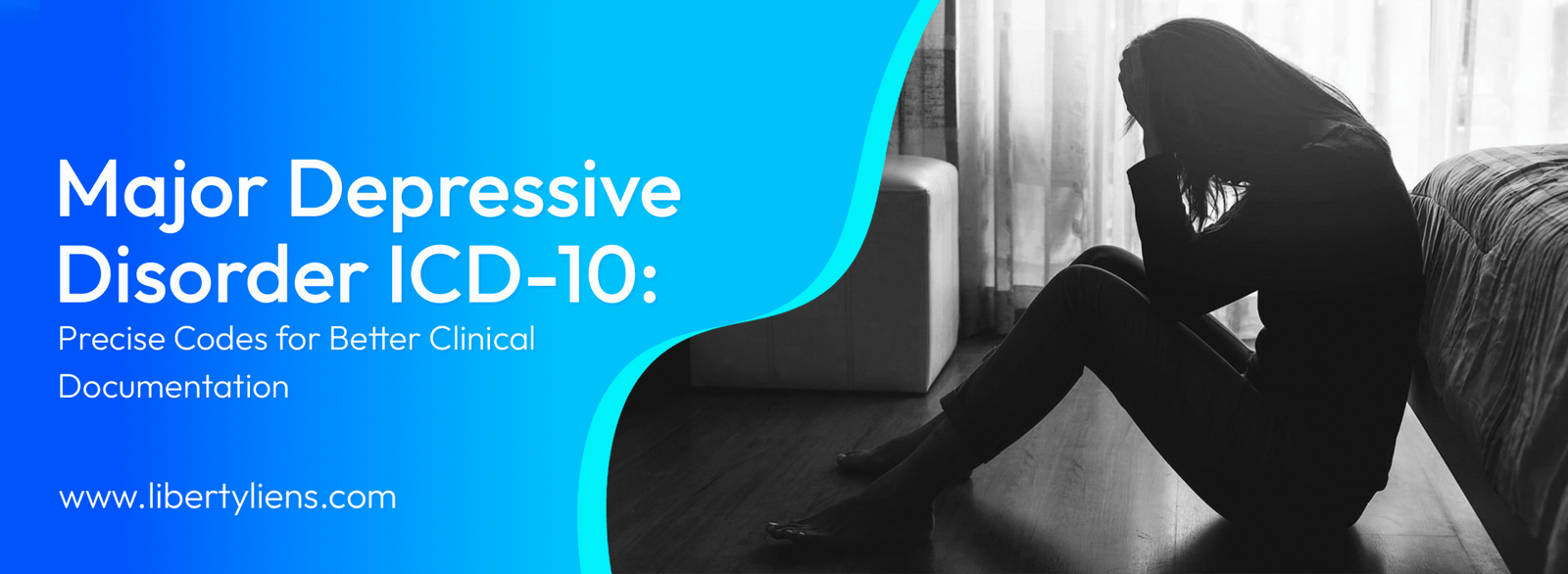
Major Depressive Disorder (MDD) is one of the most common behavioral health conditions seen in primary care, psychiatry, emergency medicine, and even specialty clinics. Most clinicians can spot the symptoms quickly, but translating that clinical picture into the correct MDD ICD-10 code isn’t always as simple. The right ICD code for major depressive disorder supports accurate diagnosis, medical billing, clinical communication, and even continuity of care.
This guide breaks down major depressive disorder ICD-10, what the codes mean, how major depressive disorder is diagnosed, and whether depression and major depressive disorder are treated the same in coding.
What Major Depressive Disorder Actually Means
Major depressive disorder (MDD) isn’t just feeling low. It’s a clinical condition marked by a cluster of symptoms that last most of the day, nearly every day, for at least two weeks. People often describe:
- A heavy or empty mood.
- Loss of interest in things they used to enjoy
- Sleep troubles (too little or too much)
- Low energy or fatigue
- Trouble concentrating
- Appetite or weight changes
- Feelings of guilt or worthlessness
- Thoughts of death or self-harm
These symptoms vary in intensity, which plays a big role when choosing the correct major disorder F code or the depressive disorder ICD-10 code.
The Main ICD-10 Codes for Major Depressive Disorder
ICD-10 splits major depressive disorder into two major groups: Single episode (F32) and Recurrent episodes (F33). Each has codes based on severity.
F32 – Single Episode
Used when the patient is experiencing their first major depressive episode.
- F32.0 – Mild depression
- F32.1 – Moderate major depression ICD 10 (most commonly used, also written as f32.1 diagnosis code, icd 10 major depressive disorder single episode moderate, mdd single episode moderate icd 10)
- F32.2 – Severe, without psychotic features
- F32.3 – Severe, with psychotic features
- F32.4 – In remission
- F32.5 – In partial remission
- F32.9 – Unspecified depression (often used when documentation is limited; known as unspecified depression F code or depression ICD-10 unspecified
F33 – Recurrent Episodes
Used when the patient has had more than one depressive episode.
- F33.0 – Mild recurrent
- F33.1 – Moderate recurrent (F33.1 diagnosis code, MDD recurrent moderate ICD10)
- F33.2 – Severe, without psychosis
- F33.3 – Severe, with psychosis
- F33.40–F33.42 – In remission
- F33.9 – Recurrent, unspecified
These are the core ICD-10 codes major depressive disorder clinicians and coders use daily.
Are Depression and MDD the Same in Coding?
In conversation, yes, people often use depression mean MDD. In coding, not exactly.
- Depression may refer to mood symptoms without meeting full criteria.
- Major Depressive Disorder has defined diagnostic criteria and specific F codes.
So, depression F code (often F32.9) is not the same as major depression ICD-10 codes like F32.1 or F33.1.
If the patient meets full criteria for major depressive disorder, choose an MDD ICD code, not a general depression code, unless documentation is unclear.
How Clinicians Diagnose MDD
Diagnosis is based on:
- Clinical interview: Mood changes, duration, functional impact
- Symptom count: At least five symptoms, including low mood or loss of interest
- Duration: Two weeks or longer
- Severity: Mild, moderate, or severe
- Exclusion: Ruling out medical causes, substance-related causes, and normal grief
Tools like PHQ-9 help but do not replace a full evaluation. The final diagnosis guides the exact MDD diagnosis code or the major depressive disorder F code selected.
Common Coding Phrases You Can Use in Documentation
- Current moderate episode of major depressive disorder → F32.1
- Recurrent major depression, moderate → F33.1
- Major depressive episode, severe with psychotic features → F32.3
- Major depression, in partial remission → F32.5 or F33.41 depending on episode history
- MDD with anxious distress → Code the depression severity plus add specifier where allowed
When to Use Unspecified Codes
Unspecified depression codes like F32.9 or unspecified depressive disorder ICD10 should only be used when documentation does not clearly identify severity or episode type. If enough clinical detail is present, always code the severity.
Why the Right ICD-10 Code Matters
The ICD-10 MDD code you select affects almost every part of the patient record, care plans, authorization, quality measures, and reimbursement. A code that reflects the actual severity (mild, moderate, severe) helps the entire care team understand the current episode and guides treatment choices. For billing teams, the correct major depressive disorder diagnosis code reduces claim issues and reflects the true level of clinical work.
Documentation Tips for Coding
To assign the correct MDD ICD-10 code, include:
- Episode type (single or recurrent)
- Severity (mild, moderate, severe)
- Psychotic features
- Remission status
- Any anxious distress
- Duration of symptoms
- Impact on daily functioning
This level of clarity avoids vague coding like F32.9 and supports accurate billing.
Common Questions About MDD ICD-10 Coding
1. Are depression and major depressive disorder the same thing?
Not exactly, Depression is a general term covering a wide range of mood symptoms, while Major Depressive Disorder (MDD) is a formal clinical diagnosis with specific criteria, such as persistent low mood, loss of interest, and functional impairment.
2. Can major depressive disorder be coded without knowing the severity?
No. Documentation must specify the clinical severity. If the provider does not clearly state it, coding accuracy drops, and claims may be denied.
3. Does documentation affect reimbursement?
Yes, Insufficient detail, missing severity, or unclear episode status can lead to claim issues and inaccurate patient records.
4. Can someone have major depressive disorder along with other conditions?
Yes, major depressive disorder commonly co-exists with anxiety disorders, chronic illnesses, and substance-related conditions. When present, they should be documented separately to complete the clinical picture.
5. How often should major depressive disorder be updated in the medical record?
At every significant clinical encounter. Any change in severity, symptoms, or remission should trigger updated documentation and coding.
Conclusion
MDD ICD-10 is a treatable condition, and correct documentation supports better outcomes and cleaner claims. When the record clearly states the severity and whether the episode is single or recurrent, the ICD-10 selection becomes painless.
For coders, the difference between F32.1, F33.1, and F32.9 can change the entire billing picture, so detailed charting matters.
If your practice wants cleaner documentation, accurate coding, and faster lien processing, Liberty Liens helps make your workflow smoother from start to finish.