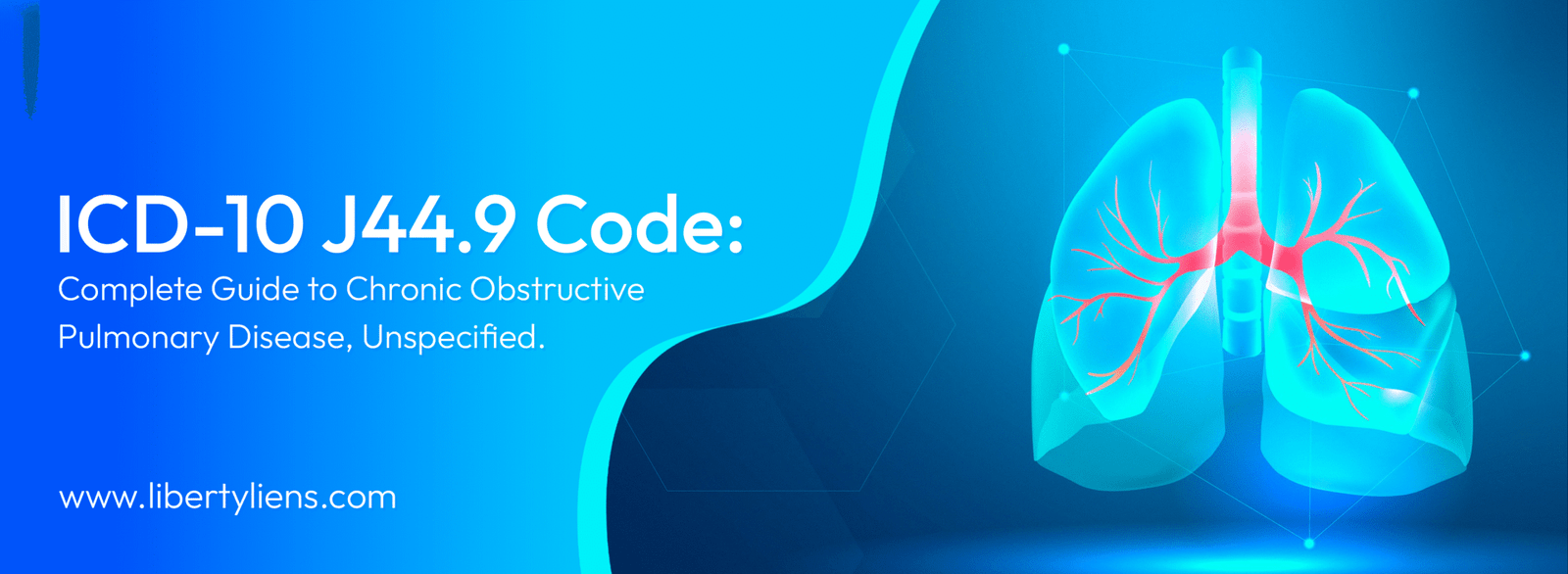
Chronic Obstructive Pulmonary Disease (COPD) is a lung condition that makes breathing harder and gradually reduces airflow. In medical records, the ICD-10 code J44.9 is used when COPD is documented without extra detail about the type or current status. This code keeps the chart consistent and helps billing teams submit claims without confusion. Because pulmonologists manage COPD routinely, accurate documentation and coding play an important role in treatment planning, billing accuracy, and claim success for the practice.
This guide breaks down what J44.9 represents, when it should be used, and how it differs from more specific COPD-related codes.
What is Chronic Obstructive Pulmonary Disease (COPD)
Chronic Obstructive Pulmonary Disease (COPD) is a long-term, progressive lung disease that makes it difficult for a person to breathe. It happens when the airways and air sacs in the lungs become damaged, inflamed, or narrowed.
Causes and Risk Factors
Although COPD has many contributing factors, the most common causes include:
- Long-term cigarette smoking (still the leading cause worldwide)
- Secondhand smoke exposure
- Environmental or occupational pollutants (dust, fumes, chemicals)
- Air pollution
- Genetic conditions, such as alpha-1 antitrypsin deficiency
These factors contribute to chronic airway inflammation and progressive lung damage
Symptoms of COPD
Common symptoms of COPD include:
- Breathlessness, especially during physical activity
- Wheezing
- Persistent Cough
- Tightness in the chest
- Frequent respiratory infection
- Fatigue
These symptoms appear gradually, making them easy to overlook at first. If you are experiencing them, it’s important to seek medical evaluation for an accurate diagnosis. Identifying COPD early allows better management, improved quality of life, and slower progression of the condition.
How COPD Is Diagnosed
Diagnosis usually includes:
- Medical history, including smoking and exposure details
- Physical exam findings like wheezing or reduced breath sounds
- Spirometry that shows a reduced FEV1/FVC ratio
- Imaging, such as a chest X-ray or a CT scan
Good documentation of these findings helps coders choose the most accurate code instead of relying on J44.9.
Chronic Lung Conditions Linked to COPD
COPD is a broad term that includes three long-term lung conditions that reduce airflow:
1. Chronic Bronchitis
Chronic bronchitis causes long-term inflammation of the airways. This leads to a persistent cough, mucus production, and narrowed air passages, making it harder for air to move in and out of the lungs.
2.Emphysema
Emphysema damages the air sacs (alveoli) in the lungs. As these air sacs lose their elasticity, the lungs can’t exchange oxygen as efficiently. This results in shortness of breath and reduced lung capacity over time.
3. Refractory Asthma
Refractory asthma is a type of asthma that is hard to control, even when a person takes their medicines regularly. The airways stay swollen and tight, so breathing problems continue. People with this condition often have frequent flare-ups. Because the airflow doesn’t improve much with treatment, it can sometimes look similar to COPD.
Even though these conditions are different, they all make it harder for air to move in and out of the lungs, which causes breathing problems. Because of this shared issue, they are grouped under COPD for medical understanding and coding.
What Does ICD-10 Code J44.9 Mean
ICD-10 code J44.9 is a diagnostic code used to report Chronic Obstructive Pulmonary Disease (COPD), Unspecified. This code applies when a clinician documents that a patient has COPD but does not include additional details.
When and Why Clinicians Use ICD-10 Code J44.9
The code J44.9 is used when a clinician confirms that the patient has COPD but does not specify:
- The type (emphysema vs chronic bronchitis)
- Severity
- Presence of acute exacerbation
- Associated infection
Common situations where J44.9 appears include:
- Visits where the note simply states COPD
- Emergency visits focused on immediate treatment
- Transitional care when full records are not yet available
- Chronic care visits where COPD is listed but not addressed during the encounter
Relevant ICD-10 Codes for COPD
When documenting or coding COPD, selecting the right ICD-10 code depends on the details in the provider’s note. Here’s a concise reference to help distinguish J44.9 from more specific diagnoses.
1. Core COPD Codes (J44 Category)
These codes are used when COPD is confirmed, and the provider documents additional information, such as infection or exacerbation
| Description | ICD-10 Code |
| COPD with acute lower respiratory infection | J44.0 |
| COPD with acute exacerbation | J44.1 |
| COPD, unspecified | J44.9 |
2. Emphysema Codes (J43 Category)
These codes are used when the provider specifies emphysema rather than general COPD.
|
Description |
ICD-10 Code |
| Panlobular emphysema | J43.1 |
| Centrilobular emphysema | J43.2 |
| Other emphysema | J43.8 |
| Emphysema, unspecified | J43.9 |
3. Chronic Bronchitis Codes (J41–J42 Category)
These codes are used when documentation clearly states chronic bronchitis, not COPD unspecified.
| Description | ICD-10 Code |
| Simple chronic bronchitis | J41.0 |
| Mucopurulent chronic bronchitis | J41.1 |
| Mixed simple and mucopurulent chronic bronchitis | J41.8 |
| Chronic bronchitis, unspecified | J42 |
4. When COPD and Asthma Coexist
If the provider documents both conditions, coders typically report both
| Description | ICD-10 Code |
| COPD plus asthma (asthma code depends on type/severity) | J44.9 + J45.x |
Why Clear Documentation Matters
Good documentation has a direct impact on:
- Code accuracy
- Proper claim submission
- Fewer denials
- Continuity of care
- Pulmonologist follow-up planning
Medical billing teams can only code what is written, so clear notes help prevent delays and rework. Claim managers depend on accurate codes to keep claims moving without repeated corrections.
Support for Clinics: Pulmonologist, Billing, Claim Management & Liberty Lien
COPD coding affects many parts of a clinic’s workflow. When documentation is clear, and codes match the visit, pulmonologists get better insight into disease progression, and billing teams can process claims without unnecessary setbacks.
If your practice needs steady support with medical billing, code review, or follow-up on unresolved claims, Liberty Lien offers services that help clinics stay organized and reduce lost revenue. This is especially helpful for practices that manage high volumes of chronic lung patients and need consistent claim accuracy
Final Thoughts
COPD is a long-term condition that requires clear documentation and correct ICD-10 coding. J44.9 works as the code for COPD when the chart does not include additional detail. When the provider includes the type, infection status, or an exacerbation, a more specific code improves accuracy for both clinical care and billing.
Clinics that want smoother billing, fewer denials, and reliable claim follow-up can benefit from support services like Liberty Lien, especially when COPD and other chronic conditions make documentation more demanding.