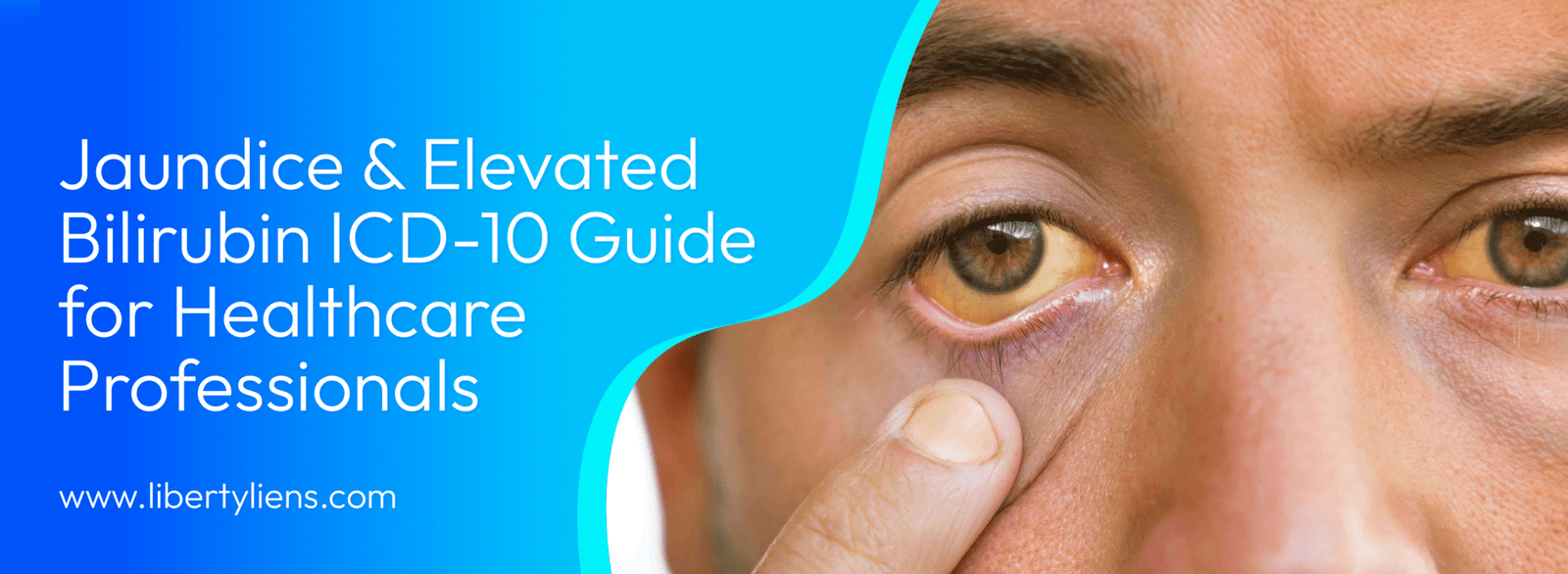
Sometimes the first sign that something isn’t right in the body is as simple as a yellow tint in the eyes or skin. That yellowing, known as jaundice, isn’t a diagnosis on its own. It is a signal that bilirubin levels are rising, and the liver, bile ducts, or red blood cells may not be working the way they should.
In clinical documentation, this finding is captured using ICD-10 codes, which help clinicians communicate the underlying cause and ensure patients receive the right care. Understanding how elevated bilirubin and jaundice are coded under ICD-10 guidance isn’t just a routine entry. It is a reflection of the story the patient’s body is trying to tell. If we interpret it correctly, we can guide the next steps with far more clarity. The better medical professionals capture the story, the better care and reimbursement patients receive.
When Yellow isn’t just a Color
Bilirubin is a yellowish pigment formed during the breakdown of old red blood cells. Normally, the liver processes it efficiently, but problems arise when the bilirubin level rises and starts to accumulate in the bloodstream. This buildup is often first detected through a lab test, sometimes before any visible signs (yellowing) appear.
From a coding perspective, elevated bilirubin is captured under:
| ICD-10 Code | Description |
| R79.89 | Other specified abnormal findings of blood chemistry, used when elevated bilirubin is noted, but no specific cause is identified. |
| R74.0 | Nonspecific elevation of levels of transaminase and bilirubin, used when total bilirubin rises along with other liver enzymes. |
Recognizing elevated bilirubin early is crucial. It signals that further investigation is needed, and accurate coding ensures these lab findings are properly documented for both clinical and medical billing purposes.
Jaundice ICD-10: More Than a Symptom on a Chart
Jaundice ICD-10, is a condition where the skin, eyes, and sometimes other tissues take on a yellowish color. This happens when there is too much bilirubin natural pigment, created when the body breaks down old red blood cells in the blood.
Jaundice itself isn’t a disease. It’s a symptom that can signal liver problems, bile duct blockages, blood disorders, or other health issues. Doctors usually check blood tests and sometimes imaging to find the underlying cause.
Common signs include:
- Yellowing of the whites of the eyes (sclera)
- Yellowing of the skin
- Dark-colored urine or pale stools
ICD-10 coding for jaundice includes:
- R17 – Unspecified jaundice, used when the cause hasn’t been determined.
Specific adult cases may require other codes, for example:
- K83.1 – Obstruction of the bile duct, when imaging or labs show a mechanical blockage.
Documenting jaundice accurately ensures patient symptoms are reflected correctly in the chart and supports smooth claim processing.
Different Types of Jaundice ICD-10
Depending on the causes, these include:
1. Neonatal Jaundice
Neonatal jaundice is the yellowing of a newborn’s skin and eyes caused by elevated bilirubin levels that the immature liver can’t clear quickly. Usually appears within the first week of life.
ICD-10 Codes
- P59.9 – Neonatal jaundice, unspecified
- P59.0 – Neonatal jaundice associated with preterm birth
- P59.1 – Neonatal jaundice due to hemolysis
- P55.1 – Neonatal jaundice due to hemolysis from ABO incompatibility
2. Prehepatic (Hemolytic) Jaundice
Caused by the excess breakdown of red blood cells before bilirubin reaches the liver (for example, hemolytic anemia, sickle cell disease)
ICD-10 Codes
- D55.0 – Glucose-6-phosphate dehydrogenase (G6PD) deficiency
- D55.1 – Other enzyme disorders affecting red cells
- D55.2 – Hemolytic anemia due to enzyme disorders, unspecified
- D56.0 – Alpha thalassemia
- D56.9 – Thalassemia, unspecified
- D57.0 – Sickle cell disease with crisis
- D57.1 – Sickle-cell disease without crisis
- D57.9 – Sickle-cell disorder, unspecified
- D58.0 – Hereditary spherocytosis
- D58.9 – Hereditary hemolytic anemia, unspecified
- D59.0 – Autoimmune hemolytic anemia
- D59.1 – Non-autoimmune hemolytic anemia
- D59.9 – Acquired hemolytic anemia, unspecified
3. Hepatic (Hepatocellular) Jaundice
Results from liver cell damage, impairing bilirubin metabolism. Causes include hepatitis, cirrhosis, and alcoholic liver disease.
ICD-10 Codes
- B15.9 – Acute Hepatitis A
- B16.9 – Acute Hepatitis B (without delta-agent)
- B18.1– Chronic Hepatitis B (unspecified)
- B18.2 – Chronic Hepatitis C
- K70.0 – Alcoholic fatty liver
- K70.9 – Alcoholic liver disease, unspecified
- K72.0 – Acute and subacute hepatic failure
- K73.0 – Chronic persistent hepatitis, not elsewhere classified
- K73.9 – Chronic hepatitis, unspecified
- K74.0 – Hepatic fibrosis
- K75.0 – Abscess of the liver
- K76.0 – Fatty liver disease (with jaundice, if documented)
- K76.9 – Liver disease, unspecified
4. Post hepatic (Obstructive) Jaundice
Caused by the blockage of bile flow from the liver to the intestine. Common causes: gallstones, tumors, strictures.
ICD-10 Codes
- K83.1 – Obstruction of the bile duct
- K83.5 – Stricture of the bile duct
- K83.8 – Other specified diseases of the bile ducts
- K83.9 – Disease of bile ducts, unspecified
- K80.3 – Calculus of the bile duct with obstruction
- K80.8 – Other cholelithiasis with obstruction
- C22.0 – Liver cell carcinoma
- C24.0 – Malignant neoplasm of the extrahepatic bile duct
- C25.0 – Pancreatic head cancer (the most common malignant cause of jaundice)
5. Unspecified Jaundice
When the exact cause is not documented.
ICD-10 Code
- R17 – Jaundice, unspecified
Hyperbilirubinemia in Coding Language
Hyperbilirubinemia refers to elevated bilirubin in the blood, usually identified through labs. Unlike jaundice, it may not have visible signs. The hyperbilirubinemia ICD-10 code captures this lab-driven finding.
Choosing between hyperbilirubinemia and jaundice codes depends on the documentation:
- If the provider notes yellowing, use a jaundice code.
- If only labs are mentioned, hyperbilirubinemia codes like R79.89 are appropriate.
This distinction ensures both patient care and billing remain accurate.
If you’re also looking for ICD-10 guidance on ADHD, you can explore our detailed ADHD ICD-10 article as well.
Why Accurate Observation Matters
Noticing yellowing early, checking lab results, and documenting symptoms carefully ensure the right care steps are taken. It helps doctors:
- Identify whether jaundice is temporary or signals a more serious problem
- Decide if further testing, like imaging or liver panels, is needed
- Track changes over time to monitor liver health
- Even small signs like subtle yellowing or fatigue can be important clues.
Support from Experts
Billing and coding teams support clinicians by reviewing documentation for clarity. Claim management specialists address denials tied to incomplete or ambiguous notes. Services like Liberty Liens assist when providers need help aligning documentation with claims, ensuring patients receive timely care, and claims are processed without unnecessary delays.
Final Thoughts
Yellowing of the eyes or a rise in bilirubin can appear subtle at first, but these signs often provide important clues about what’s happening inside the body. Paying attention to lab patterns, visible changes, and patient stories helps healthcare professionals respond early and guide the right tests and treatment. Clear documentation supports this process, streamlines follow-up, and reduces unnecessary back-and-forth in patient care and claims.
Small observations make a big difference, and when bilirubin shifts or jaundice appears, those observations help everyone stay one step ahead.