Do you think a patient’s medical journey ends the moment a procedure is completed? In reality, the story continues long after the operating room or treatment area. Post-procedure monitoring is where clinicians truly understand how the body responds, whether recovery is progressing as expected, whether complications are emerging, or whether additional interventions are needed.
This is where ICD 10 hospital follow-up encounters become essential. These follow-up visits do more than track healing. They provide structured documentation that guides continuity of care, supports quality reporting, and ensures accurate coding for post-procedural evaluations.
Understanding how ICD-10-CM defines and categorizes follow-up encounters helps healthcare teams communicate precisely, capture the clinical picture correctly, and avoid coding pitfalls that can affect reimbursement and patient outcomes.
What are the ICD-10 Follow-Up Codes?
ICD-10 follow-up codes, mainly Z codes, are used when a patient returns after a procedure or treatment to monitor recovery rather than for active care. These visits help doctors check healing, detect complications, and provide guidance for continued wellness. Unlike aftercare codes, follow-up codes indicate that the active treatment phase is complete.
Common examples include
- Z09 for follow-up after completed treatment
- Z08 for post-treatment examination of malignancy
- Z39 for postnatal follow-up
Accurate use of these codes ensures proper documentation, continuity of care, and support reimbursement.
ICD-10 Codes for Hospital Follow-Up
When patients return for follow-up care after a hospitalization, accurate ICD-10 coding helps reflect the purpose of the visit and ensures proper documentation. In most cases, hospital follow-up encounters fall into two major categories, each with its own ICD-10 code
Two Main Hospital Follow-Up Codes: Z08 and Z09
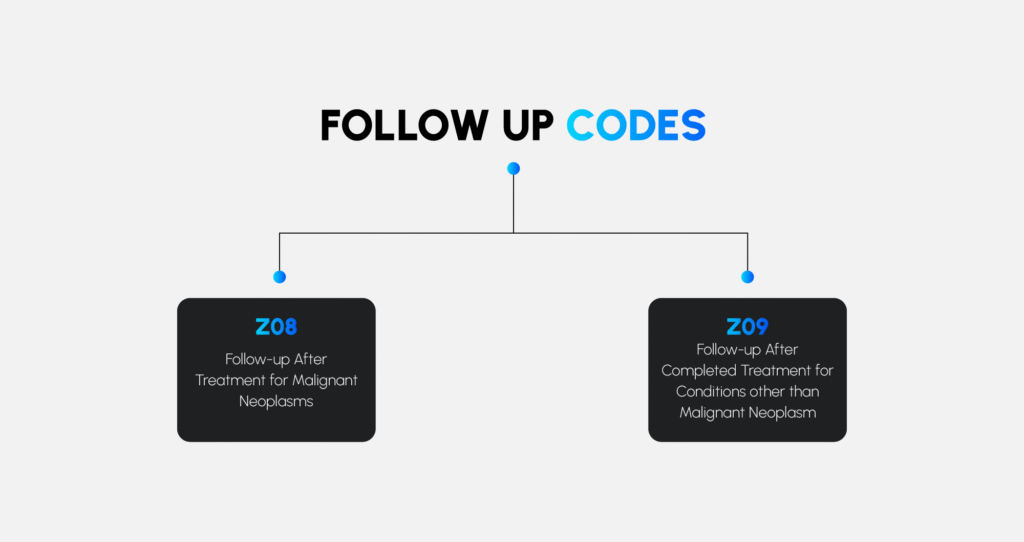
Z08 – Follow-up After Treatment for Malignant Neoplasms
Z08 applies when a patient has completed active treatment for a malignant neoplasm (cancer) and returns for a follow-up assessment.
This type of visit often focuses on:
- Routine Observation
- Checking for disease recurrence
- Monitoring recovery after cancer treatment, such as surgery, radiation therapy, or chemotherapy
Because the underlying condition was a malignant neoplasm, Z08 should always be paired with a corresponding personal history of cancer code (Z85.x). This combination provides a clear picture of the patient’s cancer history and the purpose of the visit.
Z09 – Follow-up After Completed Treatment for Conditions other than Malignant Neoplasm
Z09 is used for follow-up visits not related to cancer, when the patient has completed treatment for a wide range of non-malignant conditions.
These visits may follow treatment for issues such as:
- Pneumonia
- Heart failure exacerbation
- Injury or fracture
- Non cancer related surgery
In many cases, a personal history code from categories Z86 to Z87 may be added to indicate what condition was previously treated, unless the condition is still active, in which case it should be coded as the active diagnosis.
Related ICD-10 codes for Hospital Follow-up
The related ICD-10 codes used for hospital follow-up are listed below
| ICD-10 Code | Description |
| Z08.0 | Follow-up examination after surgery for malignant neoplasm |
| Z08.1 | Follow-up examination after radiotherapy for malignant neoplasm |
| Z08.2 | Follow-up examination after chemotherapy for malignant neoplasm |
| Z08.7 | Follow-up examination after combined treatment for malignant neoplasm |
| Z08.8 | Follow-up examination after other treatment for malignant neoplasm |
| Z08.9 | Follow-up examination after unspecified treatment for malignant neoplasm |
| Z09.0 | Follow-up examination after surgery for other condition |
| Z09.1 | Follow-up examination after radiotherapy for other condition |
| Z09.2 | Follow-up examination after chemotherapy for other condition |
| Z09.3 | Follow-up examination after psychotherapy |
| Z09.4 | Follow-up examination after treatment of the fracture |
| Z09.7 | Follow-up examination after combined treatment for other condition |
| Z09.8 | Follow-up examination after other treatment for other conditions |
| Z09.9 | Follow-up examination after unspecified treatment. |
If you’re also interested in learning about major depressive disorder ICD-10, you can check out our article on MDD ICD-10.
Hospital follow-up encounters are primarily documented using Z08 for cancer-related follow-up and Z09 for all other conditions. These codes create a clear clinical picture of why the patient is being seen and what treatment they previously completed. Adding the appropriate history codes further enhances documentation accuracy and supports denial management.
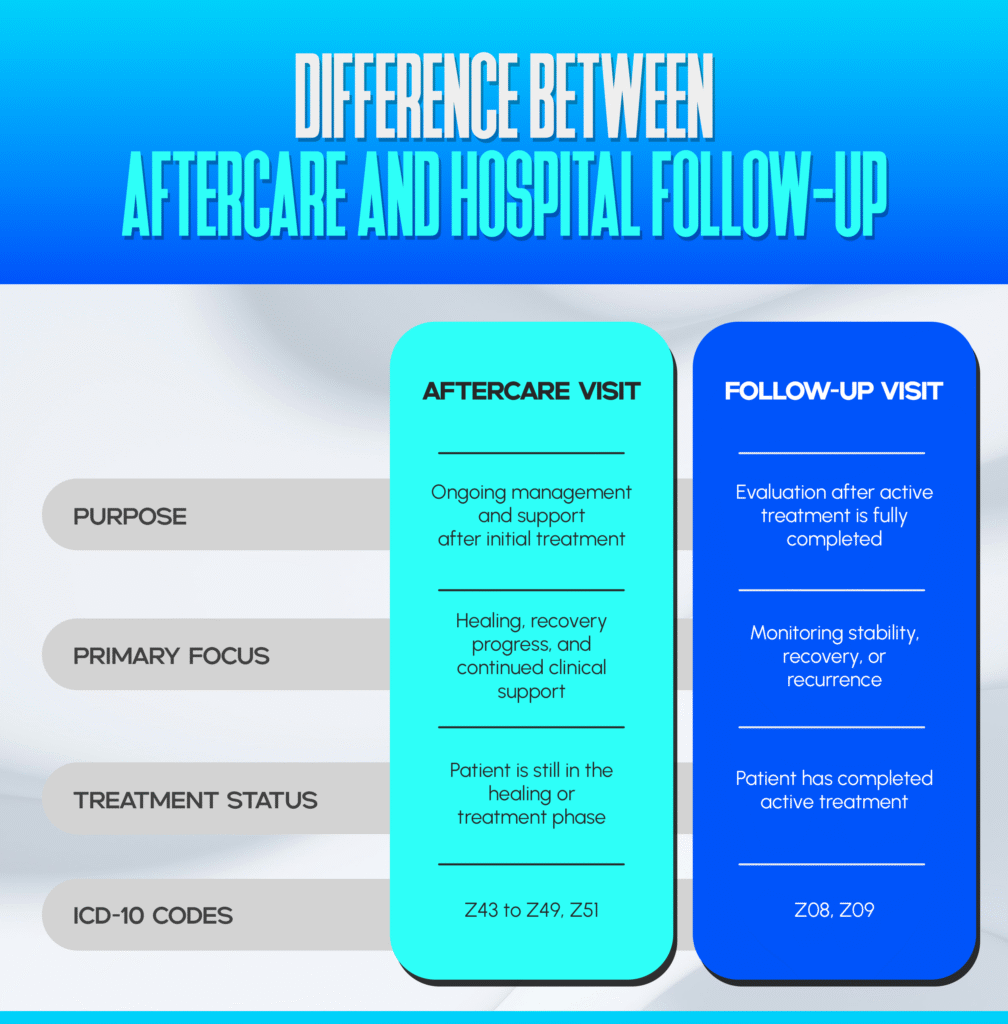
Key Difference Between Aftercare and Hospital Follow-Up
Although aftercare and hospital follow-up visits both occur after a patient receives treatment, they serve very different purposes and require different ICD-10 coding approaches.
1. Purpose of the Visit
Aftercare
Aftercare visits focus on the ongoing management of a condition after initial treatment.
The patient still needs active or supportive care, monitoring, or assistance with healing.
Examples include:
- Wound care after surgery
- Suture removal
- Cast checks
- Adjusting medications after a recent diagnosis
- Ongoing recovery support
ICD-10 range:
- Z43 to Z49, and Z51
- Z47.1 for orthopedic aftercare
Hospital Follow-Up
A hospital follow-up visit is used when the patient has completed active treatment for a specific condition and is being seen simply to evaluate recovery or confirm stability.
Examples include:
- Follow-up after hospitalization for pneumonia
- Surveillance visit after cancer treatment
- Checking for complications after discharge
ICD-10 codes:
- Z08 – Follow-up after treatment of malignant neoplasm
- Z09 – Follow-up after treatment of non-malignant condition
These codes indicate the treatment phase is complete, and the clinician is now assessing outcome, healing, or recurrence.
2. Treatment Status
Aftercare
- The patient is still in the healing or treatment phase.
- The condition may not be resolved.
- Active services (e.g., dressing change, therapy) are still being provided.
Hospital Follow-Up
- The active phase of treatment is completed.
- The visit is for evaluation, not for continued treatment.
- Monitoring for recurrence, improvement, or complications is the focus.
3. Type of ICD-10 Codes Used
Aftercare Codes
Aftercare codes describe the ongoing need for clinical support after a procedure or illness.
These codes usually begin with Z4–Z5, such as:
- Z47.1 – Aftercare following joint replacement
- Z48.0 – Aftercare following surgery
- Z51.89 – Other aftercare
The original condition is often not coded as the primary diagnosis.
Hospital Follow-Up Codes
Follow-up codes describe the evaluation phase after treatment is complete, using:
- Z08 – Follow-up after cancer treatment
- Z09 – Follow-up after non-cancer treatment
You may add a history code (Z85, Z86, Z87) to indicate what condition was treated.
4. Documentation Focus
Aftercare
The documentation typically emphasizes:
- Healing progress
- Treatment being continued
- Wound or surgical site status
- Therapy needs
- Adjustments to long-term care
Hospital Follow-Up
Documentation typically highlights:
- Reason for prior hospitalization
- Stability since discharge
- Recurrence or complication screening
- Recovery assessment
- Clearance or additional recommendation
Understanding this difference helps ensure accurate documentation, appropriate reimbursement, and clear communication of the patient’s clinical status.
Why Accurate ICD-10 Coding Matters
ICD-10 codes play a crucial role in modern healthcare. They are far more than a medical billing tool. They support communication, quality of care, analytics, and public health. When used correctly, ICD-10 codes create a standardized language that benefits patients, providers, and the healthcare system as a whole.
1. Accurate and Standardized Communication
ICD-10 provides a universal coding system that ensures every member of the care team, from physicians to specialists to insurers, understands the patient’s diagnosis in the same way.
This consistency reduces errors, prevents miscommunication, and improves continuity of care.
2. Supports Proper Billing and Reimbursement
Accurate coding directly impacts reimbursement. Because ICD-10 is highly detailed, it allows:
- Proper classification of conditions
- Correct payment for services
- Fewer claim denials
- Reduction in coding-related billing issues
Insurance companies rely on ICD-10 codes to verify medical necessity, so correct coding protects revenue and reduces administrative burden.
3. Improves Clinical Documentation
ICD-10 pushes providers to document diagnoses with more specificity. Better documentation leads to:
- Clearer patient histories
- More informed clinical decisions
- Enhanced care planning
- Improved communication with consulting providers
In short, good documentation and good coding go hand in hand.
4. Enhances Quality Reporting
Many quality metrics, such as hospital readmissions, chronic disease management, and patient outcomes, depend on accurate ICD-10 coding. Hospitals and providers use these metrics to:
- Monitor performance
- Identify areas for improvement
- Qualify for value-based reimbursement programs
Accurate coding ensures that quality data truly reflects the care delivered.
5. Advances in Research and Public Health
ICD-10 data helps shape large-scale health insights. Researchers and public health agencies use coded information to:
- Monitor disease trends
- Track outbreaks
- Improve treatments
- Identify population health patterns
This data informs policy decisions and helps allocate resources where they’re needed most.
6. Supports Risk Adjustment and Population Health Management
ICD-10 codes capture a patient’s severity of illness and chronic conditions, which is essential for:
- Risk adjustment models
- Predicting future healthcare needs
- Managing high-risk patient groups
- Coordinating care in value-based programs
Accurate coding ensures patients are assigned to the right risk categories
Pain Management in Follow-Up Visits
Continuous pain following the completion of active treatment is a common clinical concern that requires careful assessment during hospital follow-up visits. Clinicians should document the presence, severity, and impact of pain, using ICD-10 codes such as Z08 or Z09 in combination with relevant pain codes (R52 series), to ensure a complete and accurate medical record. Proper documentation not only supports continuity of care but also facilitates appropriate reimbursement. Healthcare providers seeking professional pain management billing services can rely on Liberty Liens, which offers expertise in accurately documenting these services while supporting efficient reimbursement and high standards of patient care.
Conclusion
Accurate ICD-10 coding is essential for clear communication, quality patient care, and proper reimbursement. Whether documenting hospital follow-up visits with codes like Z08 and Z09, or distinguishing them from aftercare encounters, the goal is always the same: to capture the patient’s story with precision and clarity. When providers understand how and when to use these codes, they support better clinical documentation, streamlined billing, and more reliable health data. In a healthcare environment that increasingly values accuracy and accountability, thoughtful ICD-10 coding is not just a requirement. It’s an important part of delivering high-quality, patient-centered care.