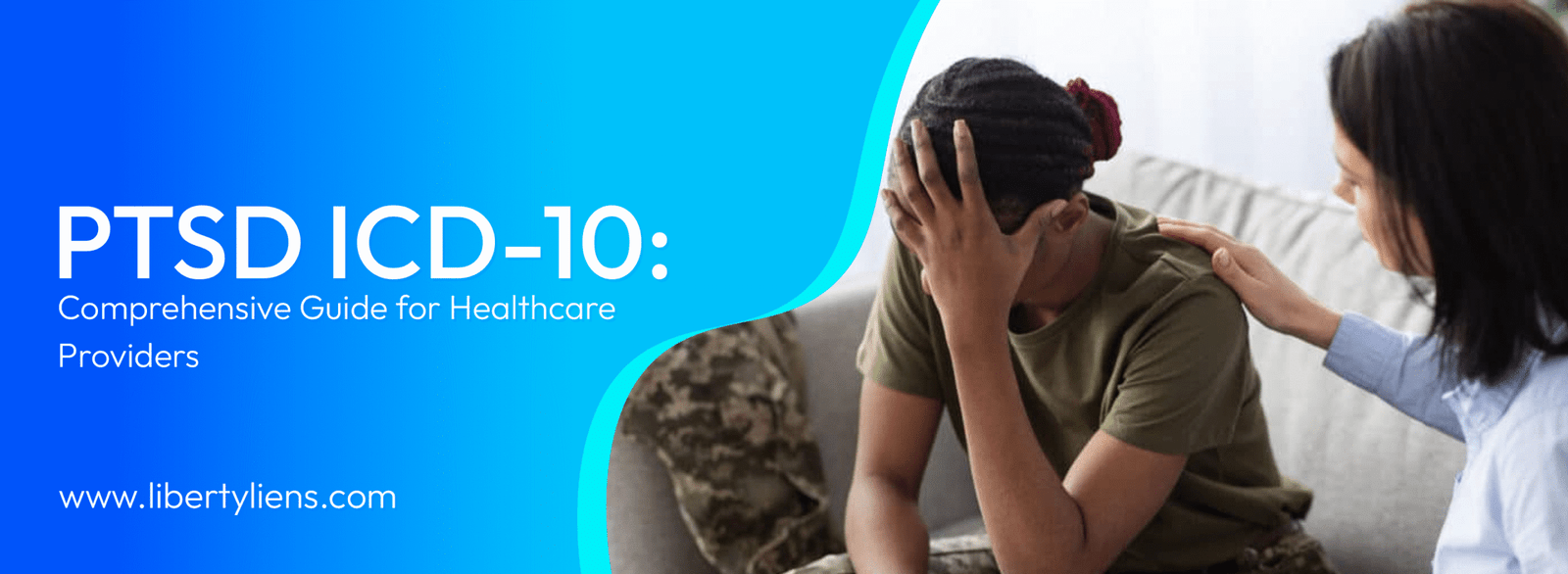
Post-Traumatic Stress Disorder (PTSD) is a serious mental health condition that can develop after experiencing or witnessing a traumatic event, such as military combat, a major accident, assault, or a natural disaster. In the United States, data indicate that approximately 3.6% of adults experience PTSD each year, with nearly 7% developing it over their lifetime. Women and people who face repeated trauma, like veterans and first responders, are more likely to get post-traumatic stress disorder. The condition affects not only mental well-being but also physical health, increasing the risk of cardiovascular disease, metabolic syndrome, and other chronic medical conditions.
For healthcare providers, understanding the clinical presentation, risk factors, and appropriate coding using PTSD ICD 10 is important to delivering effective care, ensuring proper documentation, and supporting patients in navigating insurance.
How Does PTSD Affect Patients?
Post-Traumatic Stress Disorder (PTSD) is more than an emotional reaction. It is a persistent neuropsychiatric condition that affects brain function, stress regulation, and overall health.
Patients may experience flashbacks, nightmares, emotional numbness, avoidance behaviors, and hypervigilance, which can disrupt daily life, work, and relationships.
Beyond psychological effects, PTSD increases the risk of depression, anxiety, cardiovascular disease, and metabolic disorders. These overlapping risks highlight the importance of early recognition, thorough assessment, and structured management.
If you’d like to learn more about Depression and ICD-10 codes, check out our detailed article on Depression
For healthcare providers, understanding PTSD’s full clinical spectrum is essential not only for improving patient outcomes but also for ensuring accurate documentation, denial management, treatment planning, and long-term monitoring.
ICD-10 Codes for Post Traumatic Stress Disorder
The ICD-10 system provides standardized codes that allow healthcare providers to classify PTSD based on symptom duration and severity. Using the correct code not only reflects the patient’s clinical condition but also facilitates care coordination, treatment planning, and outcome tracking. For providers, understanding these codes helps ensure that patients receive the right care at the right time and the necessary support throughout their recovery.
| ICD-10 Code | Description | When to Use |
| F43.1 | Post-Traumatic Stress Disorder | General PTSD diagnosis |
| F43.10 | PTSD, unspecified | Used when the subtype or duration is unclear, often during initial evaluation |
| F43.11 | Acute PTSD | Symptoms present for less than 3 months |
| F43.12 | Chronic PTSD | Symptoms persist for 3 months or longer |
Correct use of these ICD 10 Codes ensures that conditions are documented accurately and patients receive customized treatment plans. For healthcare providers, proficiency with PTSD ICD 10 coding is vital for improving patient outcomes, supporting insurance claims, and optimizing clinical care.
The Role of F43.10 in Insurance and Reimbursement
Accurate ICD-10 coding directly influences insurance coverage and reimbursement for PTSD-related services. Using F43.10 appropriately insurers that a patient is receiving care for a clinically recognized mental health condition, even if the duration or chronicity has not yet been established. Proper documentation that aligns with ICD-10 criteria can facilitate approval for therapy sessions, psychiatric consultations, and medication management.
Moreover, for patients navigating trauma-related claims or compensation, such as through personal injury or workers’ compensation, precise coding strengthens the medical documentation needed to support legal or financial claims. Healthcare providers benefit from understanding these implications because accurate coding ensures that patients can access necessary services without unnecessary delays or claim denials.
Assessment and Diagnostic Tools
Accurate assessment of PTSD is essential for both effective treatment and proper coding. Standardized tools help clinicians systematically evaluate symptoms and their impact on daily life. Widely used instruments include:
- Clinician-Administered PTSD Scale (CAPS-5): A structured interview that assesses symptom severity and duration.
- PTSD Checklist for DSM-5 (PCL-5): A self-report measure that helps identify symptom clusters.
- Impact of Event Scale-Revised (IES-R): Evaluates subjective distress caused by traumatic events.
Using these tools alongside careful clinical evaluation ensures that patients meet the criteria for PTSD, allowing providers to select the correct ICD-10 code, such as F43.10, F43.11,or F43.12. This not only improves patient care but also supports insurance coverage and treatment continuity.
Early Identification Improves Patient Outcomes
Recognizing and treating PTSD early can greatly improve recovery and daily functioning. When healthcare providers intervene quickly, they can offer proven therapies, such as trauma-focused cognitive behavioral therapy or Eye Movement Desensitization and Reprocessing (EMDR), before symptoms become more serious. Medications like Selective Serotonin Reuptake Inhibitor (SSRI) Selective Serotonin Reuptake Inhibitor can also help manage related anxiety or depression alongside therapy.
Studies show that patients who receive early treatment have less severe symptoms, better social and work functioning, and lower risk of long-term health problems. Early identification also helps providers document symptoms correctly using PTSD ICD 10 codes, making care more organized and effective. Overall, timely treatment supports healing, resilience, and a better quality of life for patients.
Distinguishing PTSD from Other Conditions
PTSD shares symptoms with other mental health disorders, so careful evaluation is necessary to avoid misdiagnosis. Conditions that may resemble PTSD include:
- Anxiety Disorders: Generalized anxiety or panic disorder may involve hyperarousal but usually lacks trauma-specific triggers.
- Major Depressive Disorder: Emotional numbness and withdrawal overlap with PTSD, but depression does not typically include re-experiencing trauma.
- Adjustment Disorders: These occur after stressful events but are usually less severe and shorter in duration than PTSD.
- Dissociative Disorders: Depersonalization or derealization may appear in PTSD but can also occur independently.
Accurate differentiation ensures that patients receive targeted interventions, which improves outcomes and guides the use of the correct PTSD ICD 10 codes.
Tips for Effective PTSD Management
- Use assessment tools to get a complete picture of a patient’s trauma and how it’s affecting them.
- Document PTSD using the most specific ICD-10 code based on symptom duration and subtype.
- Start therapies as soon as possible to help prevent symptoms from getting worse.
- Monitor comorbid conditions and coordinate care with primary care or specialty providers.
- Educate patients and families about the disorder and expected recovery trajectory to foster engagement and adherence.
Supporting Patients Beyond Clinical Care
Effective assessment, treatment, and documentation are key to helping patients recover from PTSD. But many also face hurdles with insurance approvals, disability claims, or compensation. Using accurate PTSD ICD-10 coding helps ensure a patient’s medical records clearly reflect their condition, making these processes much smoother.
Liberty Liens helps healthcare providers efficiently handle insurance and lien-related claims, allowing them to focus on delivering high-quality care while ensuring their patients receive the necessary coverage, therapy, and support.
Conclusion
PTSD is a complex yet treatable condition affecting millions of patients each year. For healthcare providers, understanding PTSD ICD 10 codes, recognizing symptoms, applying structured assessments, and following evidence-based treatment strategies are essential for delivering effective care. Accurate coding and documentation not only improve patient management but also support insurance processes and ensure timely access to treatment. By integrating this knowledge, providers can deliver high-quality, patient-centered care, helping patients recover, regain function, and improve their overall quality of life.