Cloud computing is one of the biggest reasons why Healthcare in the United States is changing fast, every day. According to Grand View Research, the global healthcare cloud computing market was valued at $19.6 billion in 2023 and is expected to grow to $45.1 billion by 2030, proving that cloud technology is becoming an essential part of modern healthcare.
Cloud technology in healthcare helps hospitals and clinics manage patient information efficiently, support telehealth, and enable remote monitoring. With healthcare cloud services, providers can securely access electronic health records, collaborate across departments, and improve patient care.
The rising demand for digital solutions and cloud healthcare solutions is transforming how the healthcare industry operates. To understand its full potential and impact, it is important to first explore what cloud computing in healthcare really means.
What is Cloud Computing in Healthcare?
Cloud computing is a technology that allows data, software, and services to be stored and accessed over the internet instead of on physical computers or local servers. It offers flexibility, scalability, and cost savings, making it easier for organizations to manage and share information securely.
In the healthcare field, cloud computing is used to store and process large amounts of patient data safely and efficiently. Hospitals, clinics, and healthcare providers use cloud healthcare solutions to access electronic health records, support telemedicine, and enable remote patient monitoring. This allows medical teams to collaborate in real time and provide better, faster care.
In the U.S., leading healthcare organizations are turning to cloud computing to improve patient care.
For Example:
Mayo Clinic uses cloud platforms to securely share patient records across departments, while Kaiser Permanente stores electronic health records (EHRs) in the cloud to allow doctors instant access from any location.
Similarly, Mount Sinai Health System leverages cloud-based analytics to predict patient outcomes and streamline hospital operations.
Overall, cloud computing in the healthcare industry plays a key role in improving data management, reducing costs, and enhancing patient care. It is transforming healthcare into a more connected, data-driven, and patient-centered system.
Types of Cloud Services in Healthcare
After understanding what cloud computing means, it’s equally important to explore the types of cloud services used in healthcare. Each model has its own uses and limitations.
Public Cloud
Public cloud provides hospitals and clinics with on-demand access to computing resources hosted by third-party providers. It allows healthcare organizations to run telemedicine platforms, mobile health apps, and general data storage without investing in expensive infrastructure.
It is cost-effective and highly scalable, allowing hospitals and clinics to expand resources as needed. It also reduces the need for heavy upfront infrastructure investment. However, it offers less control over sensitive data, which means organization relies on the provider’s security measures.
Example: AWS HealthLake, Microsoft Azure.
Private Cloud
Private cloud is dedicated to a single healthcare organization, ensuring high security and data privacy. It is commonly used for storing electronic health records (EHRs) and other sensitive medical data.
It offers enhanced security and compliance, which is essential for hospitals and clinics. It also provides customization and control over IT resources to meet specific healthcare needs. However, it is more expensive to implement and maintain and can be less flexible when scaling resources quickly.
Example: On-premise VMware, IBM Cloud.
Hybrid Cloud
Hybrid cloud combines private and public cloud environments to balance security and scalability. Healthcare organizations can use private cloud for sensitive data and public cloud for analytics or research.
It provides flexibility and cost-efficiency while keeping critical data secure. It enables organizations to optimize workloads based on sensitivity and performance requirements but can be complex to manage across multiple environments.
Example: AWS Outposts, Azure Stack.
Community Cloud
Community cloud is shared among multiple healthcare organizations with common requirements, such as regional hospitals or health networks. It allows secure collaboration and data sharing across organizations.
It reduces infrastructure costs through shared resources and standardized healthcare processes between member organizations. However, it offers limited customization compared to a private cloud, and security depends on all participants maintaining proper compliance and protocols.
Example: Google Cloud Healthcare Data Engine.
Every healthcare organization has different priorities when it comes to managing data. Some require maximum security and control, while others need flexibility and the ability to scale resources quickly. Understanding the different types of cloud computing in healthcare is essential because each model offers unique advantages. Hospitals, clinics, and healthcare startups can choose the model that best fits their operational needs, whether it’s for storing patient records, supporting telemedicine, or running advanced healthcare applications.
Cloud Computing Advantages in Healthcare
Cloud computing is reshaping how healthcare organizations store, access, and manage information. By moving to cloud-based systems, hospitals and clinics can improve efficiency, strengthen data security, and enhance patient care. From faster access to electronic health records to real-time collaboration between doctors, cloud technology is helping the healthcare industry become more connected, reliable, and patient-focused.
Before diving into the challenges, it’s important to understand the key benefits that cloud computing brings to the healthcare industry. Let’s explore how this technology helps healthcare providers improve operations, reduce costs, and deliver better patient outcomes.
Better Data Security
Modern cloud platforms use advanced encryption and security tools to protect patient data. This ensures sensitive health records are stored safely and comply with U.S. privacy laws like Health Insurance Portability and Accountability Act (HIPAA).
Cost Savings
Cloud computing reduces the need for expensive servers and IT maintenance. Hospitals and clinics only pay for the services they use, making it a cost-effective choice for both large and small facilities.
Easy Access and Collaboration
With cloud services, doctors and nurses can access patient records anytime, anywhere. This helps improve teamwork, reduce delays, and make better care decisions.
Efficient Data Management
From lab results to imaging reports, hospitals manage huge amounts of data every day. Cloud computing helps organize and store this data securely, making it easier to find and share when needed.
Support for Innovation
Cloud technology supports new healthcare tools like AI, big data analytics, and telemedicine. These innovations help doctors predict diseases earlier, improve diagnoses, and enhance patient outcomes.
Cloud computing has opened new doors for innovation and better patient outcomes in healthcare. Still, to use it effectively, organizations need to address a few key challenges that come with this digital transformation
Key Challenges for Cloud Technology in Healthcare
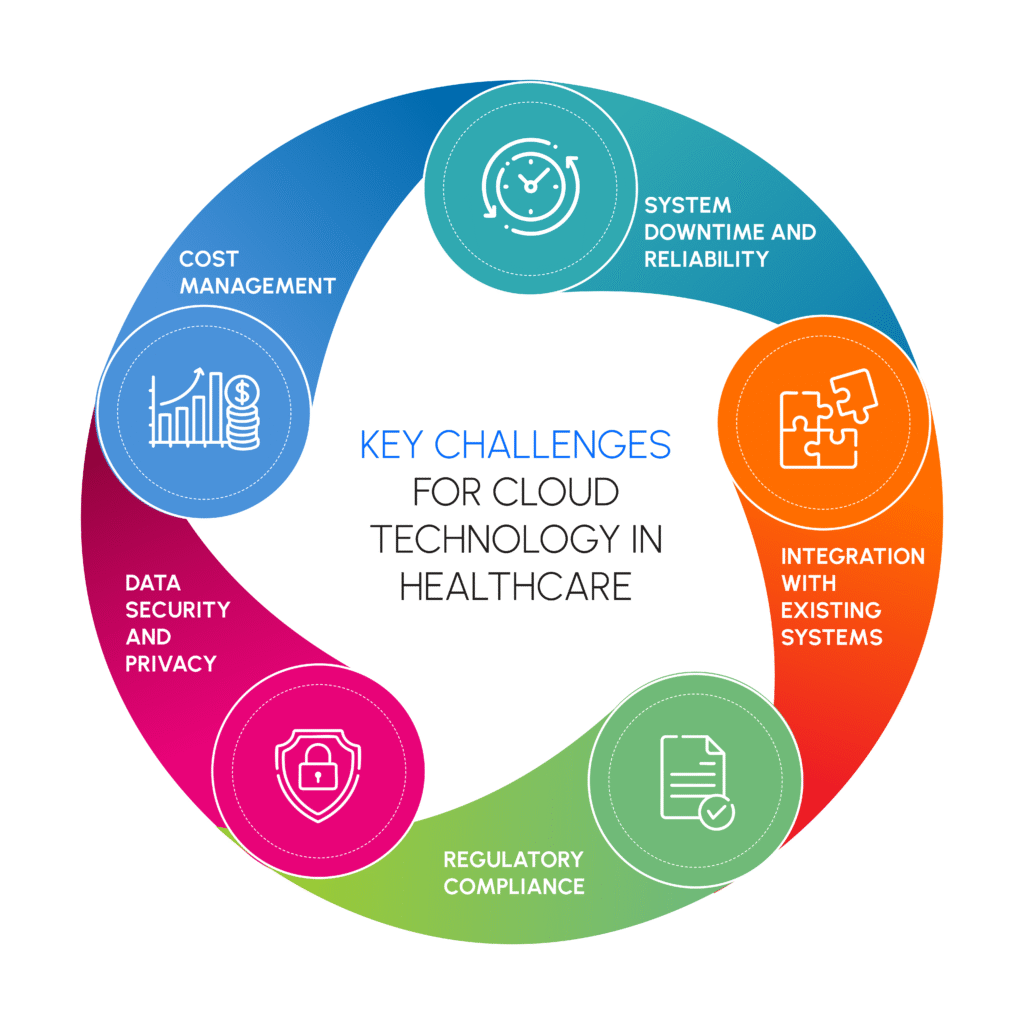
Let’s take a closer look at some of the main challenges healthcare providers face when adopting this technology.
Data Security and Privacy
Protecting sensitive patient data is the top concern. Healthcare cloud systems must safeguard electronic health records (EHRs) from unauthorized access, breaches, or cyberattacks while complying with privacy standards like HIPAA. Any lapse can compromise patient trust and lead to legal consequences.
Regulatory Compliance
Healthcare organizations must follow strict laws and regulations regarding patient data. Ensuring cloud systems meet these requirements can be complex, especially for multi-state or global operations where rules may differ.
Integration with Existing Systems
Many hospitals and clinics already use legacy systems. Integrating these with new cloud solutions can be challenging, requiring time, technical expertise, and additional resources to ensure seamless data flow.
System Downtime and Reliability
Cloud services depend on internet connectivity and provider reliability. Downtime or outages can disrupt access to patient records, telemedicine services, or critical applications, affecting patient care.
Cost Management
While cloud computing can reduce infrastructure costs, unexpected expenses can arise from subscription models, data transfer fees, or scaling resources, making budgeting a challenge for healthcare organizations.
How to Overcome These Challenges?
Healthcare organizations can overcome cloud computing challenges by implementing strong security measures such as data encryption, multi-factor authentication, and regular security audits. Protecting patient information is critical, and these steps ensure sensitive data remains safe.
Compliance with healthcare regulations is another key area. By staying up to date on laws and choosing cloud providers that comply with standards such as the Health Insurance Portability and Accountability Act (HIPAA), hospitals and clinics can meet legal requirements and maintain trust.
Integration and cost challenges can be managed through careful planning. Selecting cloud platforms compatible with existing systems, monitoring usage, optimizing resources, and using flexible pricing plans help healthcare providers reduce downtime and control expenses while enjoying the benefits of cloud computing.
Conclusion:
Cloud computing is transforming healthcare in the United States by making patient data more accessible, secure, and manageable. From enabling telemedicine and remote monitoring to supporting advanced analytics and AI-driven insights, cloud technology is helping healthcare organizations provide faster, more efficient, and patient-centered care. While challenges like data security, regulatory compliance, and system integration exist, careful planning, strong security measures, and the right cloud model can help healthcare providers overcome these obstacles. As adoption continues to grow, cloud computing will remain a key driver of innovation, cost savings, and improved outcomes, shaping the future of modern healthcare.