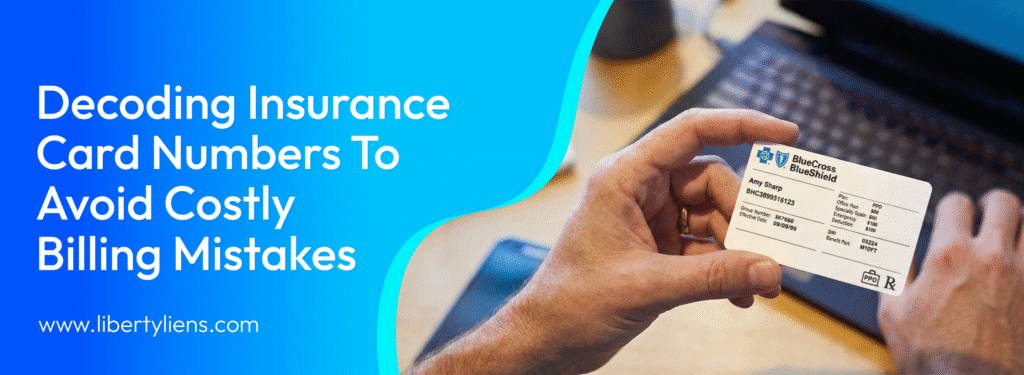
Most people don’t give much thought to their insurance card until the moment they’re standing at a clinic desk, pharmacy counter, or emergency room reception. You pull it out, hand it over, and hope everything goes smoothly. That small piece of plastic holds an incredible amount of information. It determines whether your care is covered, how much you pay, and how quickly your claims are processed.
Decoding insurance card numbers may seem random, but they are not meaningless. Each number, code, and abbreviation serves a specific purpose within the healthcare system. Knowing what these numbers mean can save you time, prevent medical billing mistakes, and help you take better control of your healthcare experience.
This guide decodes insurance card numbers and explains why they matter for healthcare providers and medical billing teams, what to look for, and how to use them effectively.
Why Insurance Card Numbers Matter in Healthcare?
Insurance is built on information, and healthcare providers depend on it for every appointment, prescription, test, or hospital visit. The information on a patient’s insurance card is the starting point for submitting accurate claims. If a number is missing, outdated, or entered incorrectly, providers face delays or denials, which can cause extra administrative work, repeated phone calls, and major delays in the revenue cycle
Decoding insurance card numbers also ensures that prescriptions are processed through the correct pharmacy network and that patients are charged according to their specific plan. This accuracy protects providers cash flow, reduces billing disputes, and maintains operational efficiency.
In short, a patient’s insurance card is more than proof of coverage. It is a critical tool for providers to bill and receive payment correctly, ensuring a smooth revenue cycle.
The Member ID
When it comes to decoding insurance card numbers, the Member ID is the most critical element. The Member ID is sometimes called the Subscriber ID or Policy Number. This number identifies the patient within the insurance company’s system.
Think of it as your healthcare fingerprint. No two members share the same Member ID, even if they are on the same family plan. When a provider looks up patient coverage, this number tells them who they are, what benefits they have, and whether they are currently eligible for services.
Using the wrong Member ID can result in claims being applied to the wrong patient, causing billing mistakes, delayed payments, and lost revenue.
Understanding the Group Number and What It Represents
If insurance comes through an employer, union, or large organization, the card will include a Group Number. While the Member ID identifies the individual, the Group Number identifies the specific benefits package tied to that plan.
For providers and billing staff, having the correct Group Number is critical to applying the right coverage rules, copays, and deductibles. Using the wrong group information can lead to incorrect patient charges, claim denials, and additional follow-up work, directly affecting the financial health of the practice.
Plan Type Codes and What They Mean for Your Care
Letters like HMO, PPO, EPO, POS, or HDHP on a patient’s insurance card indicate the structure of their insurance plan and guide how care can be accessed. For providers, understanding the plan type is critical to correctly managing referrals, determining network coverage, and billing accurately.
Plan type affects key provider decisions, including:
- Whether a referral is required before seeing a specialist.
- Whether services are considered in-network or out-of-network.
- How patient cost-sharing, copays, and deductibles should be applied.
Even though these codes may seem small, they have a direct impact on claim accuracy, reimbursement timing, and revenue cycle efficiency
Prescription Insurance Numbers
Medical coverage and prescription coverage are often handled separately, even if they fall under the same insurance company. That is why insurance cards typically include pharmacy-specific numbers like RxBIN, RxPCN, and Rx Group.
- Bank Identification Number (RxBIN): Forward pharmacy claims to the correct processor.
- Processor Control Number (RxPCN): Provides additional routing instructions.
- Rx Group: links your prescription benefits to a specific group plan.
If any of these numbers are missing or incorrect, the prescription may not process, or you may be charged the full price of the medication.
Authorization Numbers and Issuer Numbers
Some cards also include an Authorization Number, which indicates that certain procedures or treatments have been pre-approved by the insurer. This helps providers ensure coverage before performing the service, reducing the risk of denied claims.
Additionally, an Issuer Number may be present. This identifies the insurance company itself, which is particularly important for multi-state coverage or electronic claim routing. These numbers work behind the scenes to keep the healthcare and billing system running smoothly.
Different Types of Insurance Card Providers Encounter
Healthcare providers encounter a wide range of insurance cards, each with its own format, numbering system, and billing requirements. The most common include
- Private insurance cards are issued by commercial payers such as Blue Cross Blue Shield, Aetna, and Cigna. These cards typically include Member IDs, group numbers, and plan codes that determine benefit structures and billing requirements.
- Government insurance cards, including Medicare and Medicaid, follow standardized formats with specific identification numbers that must be entered accurately to ensure compliant billing and timely reimbursement.
- Marketplace (ACA) plans, offered under the Affordable Care Act, may resemble either private or public insurance cards but often have unique network rules and billing guidelines that providers must identify during verification.
- Employer-sponsored insurance cards usually include group numbers and plan codes that link coverage to an employer-specific benefits package, directly affecting eligibility verification, cost-sharing, and reimbursement.
Recognizing the type of insurance card at the point of service helps front desk and billing teams apply the correct verification process and avoid preventable denials. Understanding these differences is essential for maintaining efficient workflows and protecting the revenue cycle.
Additional Insurance Card Details Providers Rely On
Many insurance cards also include supporting details that are essential for accurate verification and AR follow-up. Front desk and billing teams depend on this information to resolve issues quickly and prevent delays in reimbursement.
- Member services phone numbers used by staff to confirm eligibility or resolve claim issues
- Copay amounts for office visits, specialists, and emergency care help set accurate patient financial responsibility
- Claim submission instructions that guide providers on where and how to send claims
- Effective and expiration dates that confirm coverage validity at the time of service
Decoding insurance card numbers details plays a critical role in reducing front-end errors, avoiding confusion related to billing, and keeping claims moving smoothly through the revenue cycle.
Payer ID Numbers and Electronic Claims Processing
Behind the scenes, most insurance claims are submitted electronically, and accurate routing is essential for timely reimbursement. To ensure claims reach the correct insurance company, healthcare systems rely on a Payer ID, a unique digital identifier assigned to each payer.
For providers and billing teams, entering the correct Payer ID is critical. An incorrect or missing Payer ID can cause claims to be misrouted, delayed, or rejected, increasing follow-up work and disrupting the revenue cycle. Accurate payer identification helps claims move efficiently through clearinghouses and reduces avoidable payment delays.
How Providers Use Insurance Card Numbers
When a patient arrives at a medical office, front desk staff use the insurance card to verify eligibility and coverage for the date of service. Member ID, Group Number, plan type, and any authorization or issuer numbers are entered into the practice management system to confirm benefits and billing requirements.
During the billing process, these same numbers are used to generate and submit claims. The Payer ID ensures the claim is sent to the correct insurer, while plan details determine patient responsibility, reimbursement rates, and coverage limitations.
At the pharmacy, prescription-specific numbers are used to calculate copays, check formulary coverage, and apply restrictions. Every step depends on accurate card information. Misreading or wrong entry insurance details doesn’t just delay claims. It increases administrative workload, slows cash flow, and adds unnecessary strain to provider operations.
Common Mistakes Patients Make with Insurance Cards
Many insurance-related issues are not caused by a lack of coverage, but by incorrect or incomplete card information. Common mistakes include:
- Using outdated or expired insurance cards
- Providing incomplete pharmacy benefit information
- Confusing Member ID, Group Number, or prescription numbers
- Assuming medical and prescription coverage are the same
These errors often result in claim rejections, delayed payments, and additional follow-up for billing teams. Verifying card details at check-in helps providers reduce denials and protect revenue.
What to Do If You Lose Your Insurance Card
Losing an insurance card can complicate care delivery, especially when verification is required before services are rendered. Fortunately, most insurers now provide digital access to insurance cards through mobile apps or online portals.
From a provider perspective, access to digital card information allows eligibility checks and billing processes to continue without interruption. Encouraging patients to keep a digital copy or key numbers on hand can help prevent delays and reduce administrative friction.
The Shift Toward Digital Insurance Cards
As healthcare systems become more digital, insurance cards are evolving as well. Many insurers now offer electronic insurance cards that can be accessed on smartphones. These digital cards contain the same information as physical cards but are easier to update, harder to lose, and reduce errors when coverage details change.
For providers, digital cards support faster verification, improved accuracy, and fewer billing issues, contributing to a more efficient revenue cycle and cleaner claims.
Final Thoughts
Decoding insurance card numbers may seem complex, but they follow a structured and purposeful system. For healthcare providers, understanding these numbers is essential for accurate billing, timely reimbursement, and effective revenue cycle management.
Patients benefit as well, but the primary advantage lies in reduced claim errors, fewer denials, and smoother administrative workflows. The next time an insurance card is reviewed, it should be seen not as a collection of codes but as a critical tool that guides billing accuracy, reimbursement success, and financial stability for healthcare organizations.
Liberty Liens expert teams help practices to simplify medical billing and ensure that insurance data is used accurately, claims are processed efficiently, and administrative burdens are reduced