
The healthcare system involves multiple insurance payers that handle payments on behalf of insured patients. This is where the Assignment of Benefits (AOB) plays a vital role.
Simply put, AOB in medical billing allows healthcare providers to receive payments directly from the insurance company instead of the patient. It ensures faster reimbursements and fewer claim complications.
When patients visit a provider, signing the Assignment of Benefits medical billing form gives the provider permission to bill the insurer directly. Along with insurance eligibility verification, this helps confirm coverage and streamline the billing process.
In the following sections, we’ll explore everything related to the Assignment of Benefits, including how it works, what information it should include, and why it’s essential for smooth and efficient medical billing operations.
What is AOB in the Medical Billing Process?
The Assignment of Benefits (AOB) is a crucial part of the medical billing process. It’s a legal agreement where a patient assigns benefits to their healthcare provider, allowing the provider to receive insurance payments directly. This insurance payment assignment ensures the provider is paid promptly for services while reducing the patient’s out-of-pocket burden.
In simple terms, once the patient signs the AOB form, the insurance company pays the doctor instead of reimbursing the patient. This process protects provider revenue, streamlines claims, and makes medical billing smoother for both patients and providers.

What are the Top Components of the Assignment of Benefits (AOB)
The Assignment of Benefits (AOB) form might look simple, but it carries real importance in the billing process. It’s the document that gives a healthcare provider permission to receive insurance payments directly. Each part of the AOB form serves a purpose, confirming patient details, outlining responsibilities, and authorizing claim submissions. When all these pieces are filled out correctly, it helps prevent payment delays and claim disputes.
Here’s a closer look at the main components every AOB in medical billing should include for smooth and accurate reimbursement.
Transfer of Financial Obligation
One of the most important outcomes of an Assignment of Benefits (AOB) is the transfer of financial obligation from the patient to the insurance company. Once the health insurance claim assignment is processed and approved, the insurer becomes responsible for paying the healthcare provider directly.
This ensures provider reimbursement via AOB and protects both patients and providers from unnecessary payment disputes. However, approval isn’t always guaranteed—rejections may occur due to specific insurance policy terms, contract clauses, or even State Law. That’s why effective denial management and billing support are vital.
Relational to State Laws
Every irrevocable assignment must comply with state-specific regulations. Even a minor change in state law or a clause in a patient’s benefits program can affect how AOB claims are handled. To stay compliant and minimize denials, providers must stay current with evolving state regulations and medical billing document requirements. Many practices rely on outsourced credentialing and patient statement services to ensure accuracy and compliance.
Exchange of Information
A valid AOB requires clear authorization for information sharing. When a patient signs this agreement, they allow the insurance company to share relevant data with the healthcare provider for payment purposes. The patient’s signature also confirms permission for a staff member to communicate directly with the insurer on their behalf. This legal step reinforces healthcare provider rights and facilitates smooth claim handling.
Establishes a Line of Communication
When an AOB is signed, patients eliminate the need to personally coordinate payment-related communication between the doctor and the insurer. The document essentially sets up a direct line of communication between both parties, allowing them to manage billing and payment matters efficiently without patient involvement.
Different Formats
While the AOB is a legal document, its structure can vary. Each provider or medical billing team may have its own format, as long as it meets medical billing document requirements and complies with healthcare and insurance regulations. Regardless of the format, the purpose remains the same. It is to authorize direct payment, ensure transparency, and streamline the health insurance claim assignment process.

What Should Be Included in the Assignment of Benefits (AOB)?
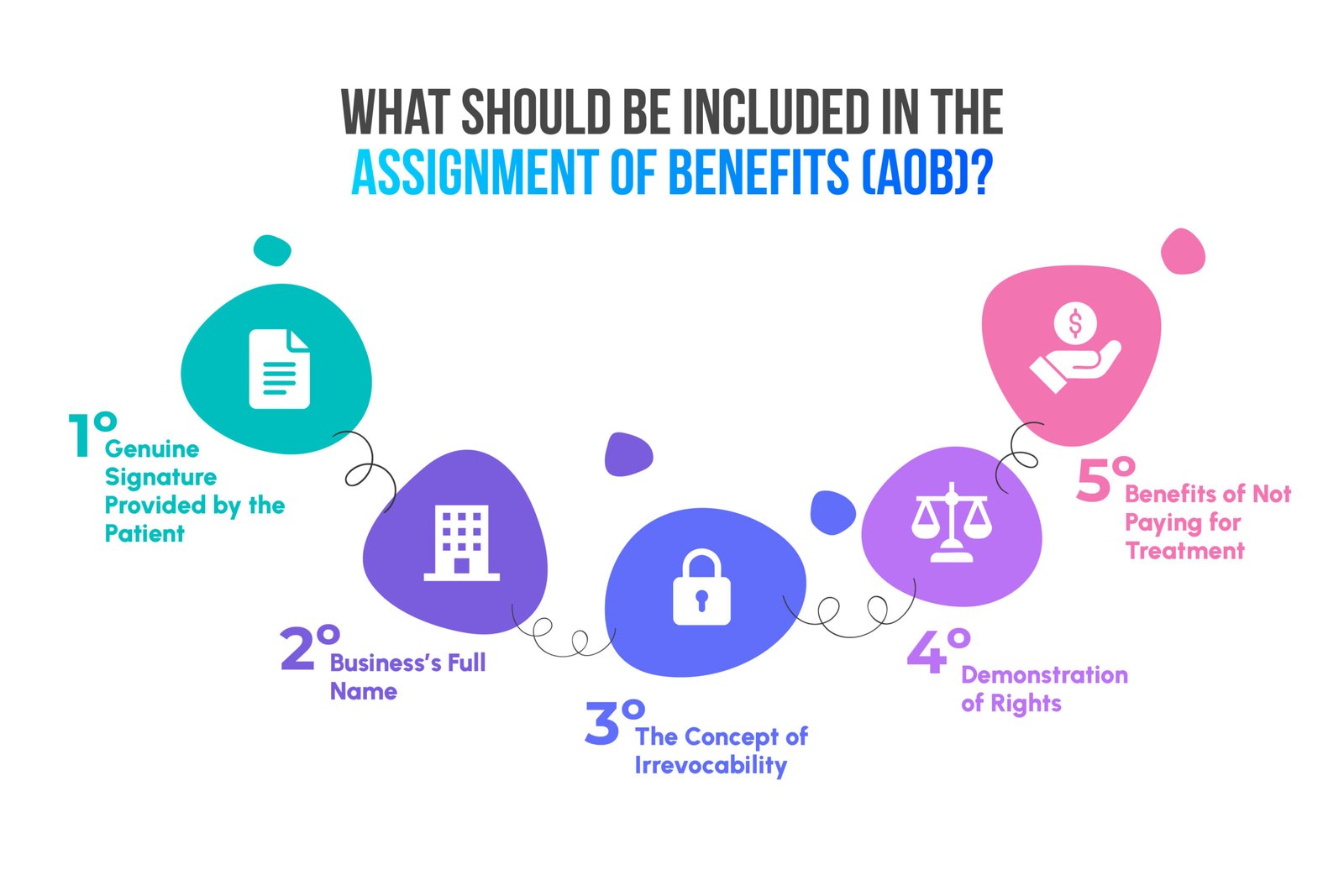
The Assignment of Benefits (AOB) should be written with care, as one signature can create a binding legal relationship between the patient, provider, and insurer.
To stay compliant with state law and assignment of benefits guidelines, it’s important to include the right details and authorizations. The following points outline what every AOB should contain to ensure smooth insurance eligibility verification and accurate payment posting services.
Genuine Signature Provided by the Patient
The patient’s genuine signature is one of the most critical parts of the Assignment of Benefits (AOB). Without it, the document cannot establish legal rights or obligations. A valid signature confirms the patient’s consent, allowing the healthcare provider to receive payments directly from the insurer. To avoid issues during claim submission, every AOB must be properly reviewed and signed before processing. Reliable medical billing partners like Liberty Liens ensure every detail from documentation to payment follow-up is handled with accuracy and compliance.
Business’s Full Name
Accuracy in the business’s full name is essential when preparing medical billing documents. Even a small spelling or formatting error can lead to claim rejections or payment delays. The official name of the healthcare organization must match across all records, including the AOB and insurance paperwork. Whether handled in-house or through outsourced medical billing services, verifying that the correct business name appears on every insurance payment assignment is vital to avoid unnecessary setbacks.
The Concept of Irrevocability
The concept of irrevocability plays a defining role in the Assignment of Benefits. By signing an irrevocable assignment, the patient agrees that the decision to transfer payment rights to the provider cannot be reversed later. This clause protects the provider’s financial interests and ensures consistent claim handling. It also supports healthcare provider rights by securing reimbursement directly from the insurance company once services are rendered.
Demonstration of Rights
Through the demonstration of rights section, the AOB clearly outlines how the provider may claim benefits under the patient’s insurance plan. This empowers the court, if necessary, to review the terms of payment made by the insurance carrier to the provider. It defines the provider’s right to compensation and establishes a transparent legal connection between all parties involved in the health insurance claim assignment process.
Benefits of Not Paying for Treatment
This section highlights an important trade-off. When a patient signs the Assignment of Benefits, the transfer of financial obligation means the provider agrees not to demand full payment at the time of service. In return, the provider gains the right to pursue payment from the insurance company if reimbursement is delayed or denied. The patient, on the other hand, forfeits their right to sue over unpaid amounts, as the financial responsibility has already been transferred.

How the Assignment of Benefits (AOB) Process Works
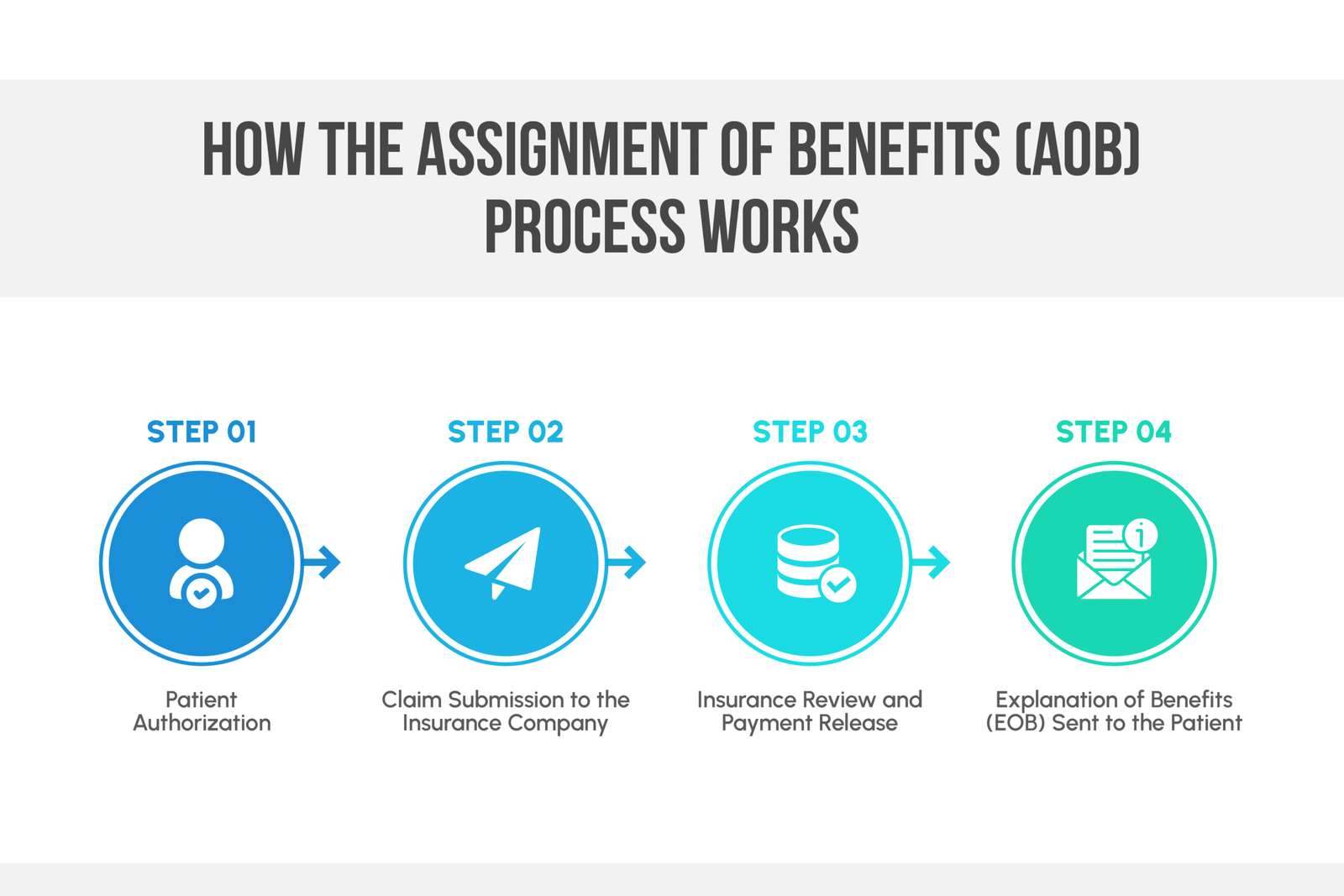
Since the Assignment of Benefits (AOB) simplifies how payments move between patients, providers, and insurers, it follows a defined process from start to finish.
Step 1: Patient Authorization
During check-in or registration, patients complete an intake form where the Assignment of Benefits (AOB) is included. Once the patient signs this form, the healthcare provider gains permission to receive payments directly from the insurance company. Many medical billing companies include this step in their onboarding process to prevent future delays in reimbursement.
Step 2: Claim Submission to the Insurance Company
After treatment is provided and the patient is discharged, the healthcare practice or its medical billing partner submits a claim to the patient’s insurance company. Since the AOB form is already signed and on file, the claim clearly states that payment should be sent to the provider instead of the patient. To make the process faster and more accurate, many practices use automated billing systems.
Step 3: Insurance Review and Payment Release
Once the insurance company receives the claim, it reviews all submitted details, verifies coverage under the patient’s plan, and then processes payment. If everything matches the insurance policy, the reimbursement is sent directly to the healthcare provider. This direct payment is one of the main advantages of having an AOB in place, helping providers avoid the hassle of collecting payments from patients.
Step 4: Explanation of Benefits (EOB) Sent to the Patient
Even after the provider receives the funds, the insurance company sends an Explanation of Benefits (EOB) to the patient. The document outlines what services were covered, how much was paid, and any remaining balance. While the Assignment of Benefits allows direct payment to the provider, patients may still need to cover deductibles, copays, or non-covered services under their insurance plan.
Benefits of the Assignment of Benefits (AOB)
The Assignment of Benefits (AOB) brings multiple advantages to healthcare providers and patients, making it an important part of the medical billing process.
-
Direct Payment to Providers
One of the biggest advantages of the Assignment of benefits medical billing is that it allows healthcare providers to receive payments directly from the insurance company. This not only saves time but also reduces the need for providers to follow up with patients for outstanding balances.
-
Simplified Claims Management
With AOB in medical billing, claims are submitted with clear authorization from the patient. This helps minimize billing errors, shortens reimbursement timelines, and ensures smoother coordination between providers and payers.
-
Reduced Out-of-Pocket Costs for Patients
Patients also benefit from the Assignment of Benefits (AOB). Once they sign it, their healthcare provider can bill the insurance company directly for the covered services. This means patients don’t have to pay the full amount upfront and can focus on their recovery instead of worrying about immediate medical expenses.
-
Legal and Financial Protection
The AOB serves as a legal safeguard for both the patient and the healthcare provider. It protects provider reimbursement rights, streamlines workers’ compensation collection, ensures compliance with payer requirements and helps to avoid disputes over payment responsibilities.
In short, the Assignment of Benefits (AOB) simplifies the medical billing process, promotes faster payments, and strengthens financial transparency between providers, patients, and insurers.

Common Mistakes to Avoid in the Assignment of Benefits (AOB)
Learning about common mistakes in Assignment of Benefits (AOB) forms is essential for every healthcare provider. Even minor errors can lead to delayed reimbursements, denied claims, or compliance issues. Knowing what to avoid helps streamline the medical billing process and ensures smooth payment posting.
Here are a few common mistakes to watch out for:
- Missing or incomplete patient signatures
- Incorrect provider or business name on the form
- Inaccurate or outdated insurance details
- Ignoring state law and assignment of benefits requirements
- Not explaining patient responsibility for deductibles or copays
Paying attention to these small details can make a big difference in preventing claim issues and securing timely payments.
Frequently Asked Questions (FAQs) About the Assignment of Benefits (AOB)
What is included in a proper Assignment of Benefits (AOB) document?
A complete Assignment of Benefits (AOB) form should include:
- The full legal name of the healthcare provider or organization
- The term “irrevocable”, confirming the patient cannot revoke the assignment later
- A clear outline of rights transferred for provider reimbursement via AOB
- The patient’s authentic signature confirming consent
What connection does the Assignment of Benefits create between the patient, provider, and insurance company?
The Assignment of Benefits (AOB) establishes a direct communication channel between the healthcare provider and the insurance company. This allows both parties to handle payment and billing matters directly, freeing the patient from managing these interactions.
What happens once the insurance company processes the claim successfully?
When a claim is approved, the insurance company assumes the patient’s financial responsibility for covered services and sends payment directly to the provider. This is one of the core advantages of AOB in medical billing, ensuring quicker reimbursements.
Why is accuracy important when submitting an AOB?
Even small mistakes, such as missing signatures, wrong provider names, or incomplete insurance details, can cause claim rejections or delayed payments. Reviewing every assignment of benefits medical billing form carefully and performing insurance eligibility verification helps avoid these issues.
Can a patient revoke an Assignment of Benefits after signing it?
Typically, no. The AOB is irrevocable, meaning it cannot be canceled once signed. However, this can vary based on state law and assignment of benefits regulations, so providers should always stay informed about local requirements.
What are the benefits of signing an Assignment of Benefits for providers?
For healthcare providers, the Assignment of Benefits (AOB) streamlines the billing process by ensuring direct payment from insurers, minimizing administrative follow-ups, and maintaining consistent revenue flow.
How can billing companies help with AOB management?
Professional billing and lien management companies, such as Liberty Liens, help providers manage AOB in medical billing efficiently. From checking compliance with state laws to ensuring proper claim submission, they simplify the process and safeguard timely reimbursements.
Conclusion — Understanding the Value of the Assignment of Benefits (AOB)
The Assignment of Benefits (AOB) is more than just a form. It’s an important part of the medical billing process that ensures accuracy, transparency, and timely reimbursements for healthcare providers a certain element.
A Quick Recap
Throughout this guide, we covered the key aspects that every provider should understand about AOB in medical billing:
-
What is AOB in Medical Billing?
A legal agreement that allows healthcare providers to receive payments directly from insurance companies.
-
Top Components of the AOB
Essential details such as the provider’s full legal name, irrevocability clause, demonstration of rights, and patient’s genuine signature.
-
What Should Be Included in the AOB Form
Compliance with state law and assignment of benefits regulations, clear authorization language, and accurate insurance details.
-
How the AOB Process Works
From patient authorization to claim submission and insurer payment, each step ensures smooth provider reimbursement via AOB.
-
Benefits of the AOB
Faster payments, reduced administrative burden, legal protection, and improved cash flow for providers.
-
Common Mistakes to Avoid
Missing signatures, incorrect business names, and incomplete insurance information can lead to denials and delays.
Why It All Matters
When done right, the Assignment of Benefits (AOB) creates a reliable link between patients, providers, and insurance companies — allowing everyone to focus more on care and less on paperwork. It safeguards financial rights, minimizes billing errors, and ensures compliance across all stages of the medical billing process.
Final Thought
For providers looking to simplify AOB handling and strengthen their billing operations, working with an experienced billing and lien management partner like Liberty Liens can make all the difference. Our team ensures every AOB is accurate, compliant, and processed efficiently — so you can focus on what truly matters: patient care.