
Left hip fractures represent one of the most serious and costly injuries among older adults in the United States. According to national surveillance data, more than 300,000 adults aged 65 and older are hospitalized each year due to hip fractures, with falls being the leading cause and osteoporosis a major contributing factor. These injuries place a significant burden on patients, caregivers, and the healthcare system.
Clinical research shows that the consequences of a hip fracture extend far beyond the initial hospitalization. Nearly one in two older adults fails to regain their pre-fracture level of mobility or independence, and many require long-term rehabilitation, assisted living, or skilled nursing care. Mortality rates also increase in the year following a hip fracture, highlighting the severity of these injuries.
Given the clinical impact and long-term outcomes associated with hip fractures, accurate ICD-10 coding for left hip fractures is essential. Proper code selection supports precise clinical documentation, ensures correct reimbursement, and allows healthcare organizations to track outcomes, evaluate quality of care, and analyze injury trends at a population level. This guide focuses on left hip fracture ICD-10 codes and the key documentation elements providers must capture for compliant and effective reporting.
What does a Left Hip Fracture Mean?
A left hip fracture occurs when the upper portion of the left femur (thigh bone) breaks near the hip joint. These fractures are classified based on the exact location of the break, which may involve:
- The femoral neck, just below the ball of the hip joint
- The intertrochanteric region, located between the femoral neck and shaft
- The subtrochanteric region, in the upper shaft of the femur
Each fracture location has a distinct ICD-10 code to ensure precise documentation. Left hip fractures typically cause severe pain, limited mobility, and difficulty standing or walking. Most cases require surgical intervention followed by extensive rehabilitation. Using the correct ICD-10 code for left hip fracture ensures clear communication among providers, accurate billing, and appropriate tracking of patient outcomes.
How Are Left Hip Fractures Categorized Under ICD-10?
Left hip fractures fall under ICD-10 Chapter 19, which covers injury, poisoning, and certain other consequences of external causes (codes S00–T88). Fractures of the femur are classified under category S72 (Fracture of femur).
Within this category, left hip fractures are coded based on:
- Specific fracture location
- Displacement status (displaced or nondisplaced)
- Encounter type (initial, subsequent, or sequela)
Correct selection of a left hip fracture ICD-10 code supports accurate documentation, smoother claims processing, and better patient care coordination.
ICD-10 Code Used for Left Hip Fracture
ICD-10 codes for left hip fractures are assigned based on the exact fracture location, whether the fracture is displaced or nondisplaced, and the stage of care. Selecting the correct code ensures accurate clinical documentation, medical billing, and proper tracking of patient outcomes.
1. Femoral Neck Fractures (Left Side)
Femoral neck fractures involve the area just belthow the head of the femur and are common in older adults following falls. These fractures may be stable or unstable and often require surgical intervention.
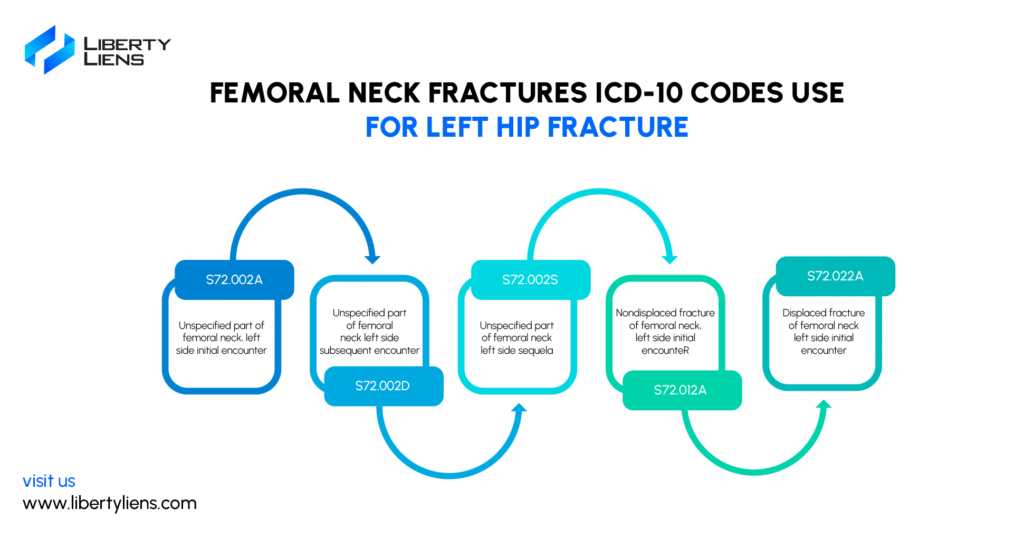
The following ICD-10 codes specify fracture type and encounter stage:
S72.002A: Unspecified part of femoral neck, left side, initial encounter
Used when documentation confirms a fracture of the left femoral neck but does not identify the specific portion involved. This code is assigned during the patient’s first visit while receiving active treatment.
S72.002D: Unspecified part of femoral neck, left side, subsequent encounter
Used for follow-up visits after the acute treatment phase when the fracture is healing as expected.
S72.002S: Unspecified part of femoral neck, left side, sequela
Used when the patient presents with complications or residual conditions resulting from a previously healed left femoral neck fracture.
S72.012A: Nondisplaced fracture of femoral neck, left side, initial encounter
Used when the left femoral neck is fractured but the bone fragments remain in proper alignment. This code applies during active treatment of the injury.
S72.022A: Displaced fracture of femoral neck, left side, initial encounter
Used when the left femoral neck fracture involves displacement of the bone fragments and the patient is receiving acute care, often requiring surgical repair.
2. Intertrochanteric Fractures (Left Side)
Intertrochanteric fractures occur between the femoral neck and the shaft of the femur. These injuries are typically unstable and frequently managed surgically.
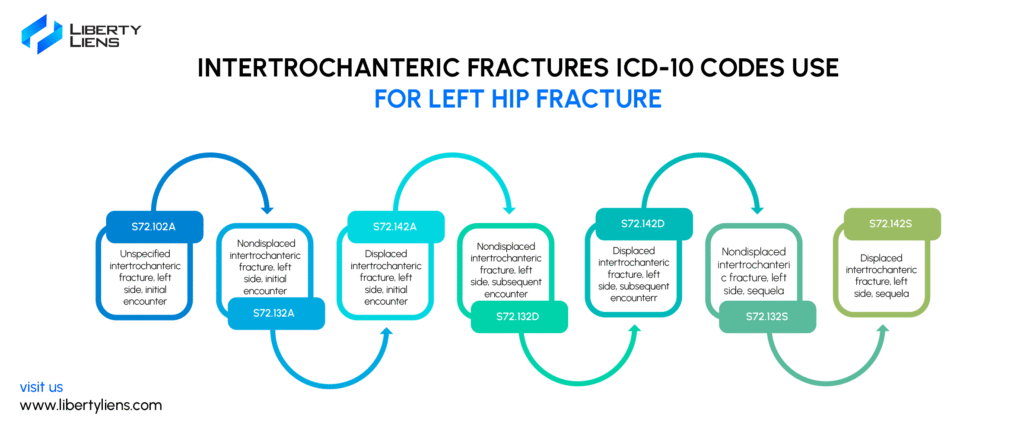
ICD-10 codes include:
S72.102A: Unspecified intertrochanteric fracture, left side, initial encounter
Used when the intertrochanteric region of the left femur is fractured, but documentation does not specify displacement. Assigned during the initial episode of care.
S72.132A: Nondisplaced intertrochanteric fracture, left side, initial encounter
Used when the intertrochanteric fracture is present without displacement, and the patient is undergoing active treatment.
S72.142A: Displaced intertrochanteric fracture, left side, initial encounter
Used when the fracture fragments in the intertrochanteric region are displaced, and the patient is receiving acute care, often involving surgical fixation.
S72.132D: Nondisplaced intertrochanteric fracture, left side, subsequent encounter
Used for routine follow-up visits when the nondisplaced fracture is healing normally.
S72.142D: Displaced intertrochanteric fracture, left side, subsequent encounter
Used during follow-up care after initial treatment of a displaced intertrochanteric fracture.
S72.132S: Nondisplaced intertrochanteric fracture, left side, sequela
Used for late effects or complications resulting from a healed nondisplaced fracture.
S72.142S: Displaced intertrochanteric fracture, left side, sequela
Used when long-term complications or residual symptoms persist after healing of a displaced fracture.
3. Subtrochanteric Fractures (Left Side)
Subtrochanteric fractures involve the upper portion of the femoral shaft just below the trochanters. These fractures are often severe and usually require surgical management.
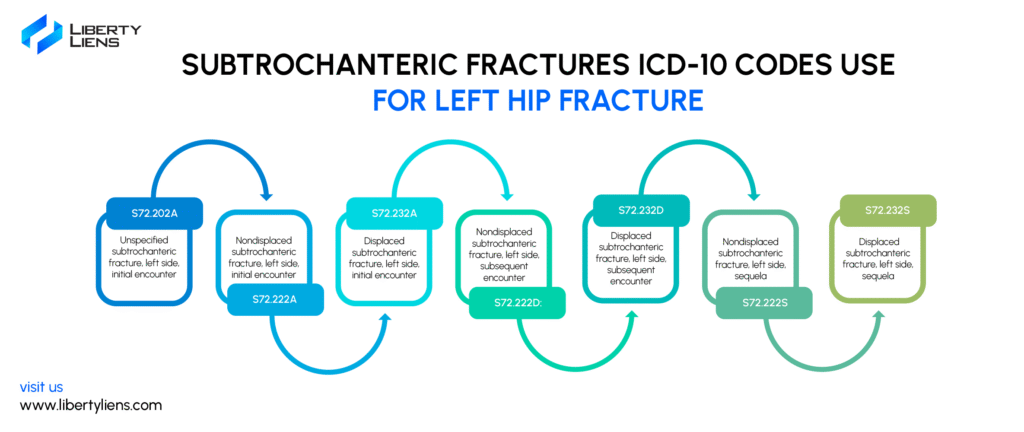
ICD-10 codes include:
S72.202A: Unspecified subtrochanteric fracture, left side, initial encounter
Used when a subtrochanteric fracture of the left femur is documented without further detail during the initial treatment phase.
S72.222A: Nondisplaced subtrochanteric fracture, left side, initial encounter
Used when the subtrochanteric fracture is stable and bone alignment is maintained during active treatment.
S72.232A: Displaced subtrochanteric fracture, left side, initial encounter
Used when the fracture involves displacement of the bone fragments and the patient is undergoing acute care, commonly surgical.
S72.222D: Nondisplaced subtrochanteric fracture, left side, subsequent encounter
Used for follow-up visits when the nondisplaced fracture is healing routinely.
S72.232D: Displaced subtrochanteric fracture, left side, subsequent encounter
Used during follow-up care for a displaced subtrochanteric fracture.
S72.222S: Nondisplaced subtrochanteric fracture, left side, sequela
Used when residual symptoms or complications remain after healing of a nondisplaced fracture.
S72.232S: Displaced subtrochanteric fracture, left side, sequela
Used for long-term effects or complications following the healing of a displaced subtrochanteric fracture
Difference Between Initial, Subsequent, and Sequela Encounters
ICD-10 encounter characters reflect the stage of treatment:
- Initial encounter (A): Used during active treatment, including surgery, emergency care, or fracture stabilization
- Subsequent encounter (D): Used for routine healing and follow-up visits.
- Sequela (S): Used for residual conditions or complications after fracture healing
Correct encounter selection ensures accurate reporting and prevents claim denials.
When Should S72.142A Be Used for Left Hip Fractures?
S72.142A is used when documentation confirms a displaced intertrochanteric fracture of the left femur and the patient is receiving active treatment. This includes both surgical and nonsurgical management during the acute phase of care.
If displacement or fracture type is unclear, unspecified codes may be used, but this can negatively impact claim accuracy and data quality.
Documentation Requirements for Left Hip Fractures
Accurate coding relies on thorough documentation, including:
- Exact fracture location, laterality (left side), and displacement
- Imaging confirmation (X-ray, CT, or MRI) and fracture status (open or closed)
- Clear identification of encounter type: initial, subsequent, or sequela
Detailed documentation ensures correct ICD-10 code selection and supports both clinical care and billing accuracy.
When Left Hip Fracture Codes Should Be Reported Separately
Left hip fracture codes should only be used for true femoral fractures. They should not be reported when:
- There is a traumatic loss of part of the hip or thigh
- The fracture occurs around a hip prosthesis (periprosthetic fractures use different codes)
- Additional fractures exist elsewhere in the body, which must be coded separately
Proper code selection based on injury location maintains compliance and accurate records.
Supporting Left Hip Fracture Documentation
Left hip fracture cases often involve complex care, multiple providers, and detailed ICD-10 coding. Accurate documentation and coding are critical for effective case management and timely reimbursement.
Liberty Liens supports healthcare teams by managing medical liens and maintaining organized, comprehensive records throughout the patient’s treatment. Their orthopedic medical billing services help align clinical documentation with ICD-10 guidelines, reduce errors, and streamline claims submission, allowing providers to focus on patient care.
Conclusion
Accurate ICD-10 coding for left hip fractures is essential for proper documentation, effective treatment planning, and smooth claims processing. Correctly identifying fracture location, displacement, laterality, and encounter stage ensures precise records and better patient outcomes. Clear documentation distinguishes femoral neck, intertrochanteric, and subtrochanteric fractures, supports continuity of care, and reduces billing errors. Adhering to ICD-10 guidelines promotes compliance, improves reimbursement accuracy, and enhances overall care quality for patients with left hip fractures.