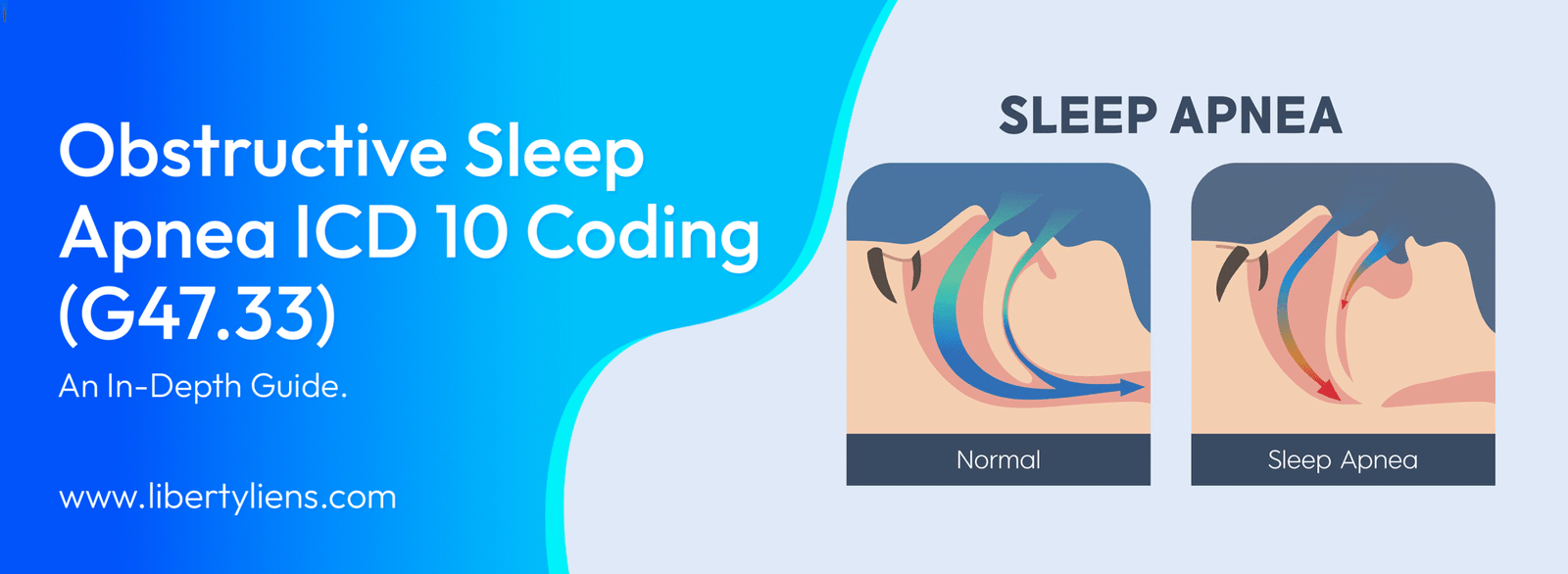
Obstructive Sleep Apnea (OSA) is a common but often overlooked medical condition that can have serious consequences if left untreated. Accurate ICD-10 coding for OSA is essential for ensuring that healthcare providers receive appropriate reimbursement, especially when managing sleep-disordered breathing. One of the most frequently used and critical codes in this category is G47.33, the official ICD-10 code for Obstructive Sleep Apnea (adult or pediatric).
This blog provides an in-depth understanding of OSA ICD 10 coding, common pitfalls in documentation, and how to ensure that claims are submitted accurately for full reimbursement. It also outlines best practices for handling denial management, AR follow-up, and coding accuracy, especially for sleep apnea, and related conditions like CPAP therapy and sleep-disordered breathing.
What Is Obstructive Sleep Apnea (OSA)?
Obstructive Sleep Apnea (OSA) is a disorder that causes interruptions in breathing during sleep due to the relaxation of muscles in the throat, leading to airway obstruction. These interruptions, known as apneas, can last anywhere from a few seconds to minutes and may occur hundreds of times during the night. OSA is often associated with excessive daytime sleepiness, snoring, fatigue, and in severe cases, heart problems and high blood pressure.
While OSA can be diagnosed with a sleep study (polysomnography), a diagnosis can also be confirmed through clinical evaluation or home sleep tests. CPAP therapy is the standard treatment for OSA, but the diagnosis itself must be coded accurately to ensure reimbursement for both testing and therapy services.
Why Accurate OSA ICD10 Coding Matters
Accurate coding for OSA is critical for several reasons:
- Compliance: The correct diagnosis and treatment codes ensure that healthcare providers comply with payer guidelines, including those from private insurers, Medicare, and Medicaid.
- Reimbursement: Miscoding or incomplete coding can result in claim denials, delayed payments, or even audits.
- Medical Necessity: Proper coding helps establish the medical necessity of the diagnostic tests and treatments provided, which is a requirement for reimbursement.
- Data Accuracy: Accurate coding contributes to epidemiological data and clinical studies that shape treatment guidelines for OSA and related conditions.
The ICD-10 Code for Obstructive Sleep Apnea: G47.33
The ICD-10 code for Obstructive Sleep Apnea ICD 10 is G47.33. This code applies when OSA is diagnosed or confirmed either by sleep study results or clinical signs and symptoms.
What Does G47.33 Mean?
- Code: G47.33
- Description: Obstructive Sleep Apnea (adult or pediatric)
- Category: G47 — Sleep Disorders
- Specificity: Applies to adult and pediatric OSA cases.
- Billable: Yes, this code is billable when OSA is confirmed.
For providers, G47.33 is the standard code for both mild and severe OSA. While severity does not impact the ICD-10 code itself, it is important for medical necessity and treatment justification.
Common Related ICD 10 Code for Obstructive Sleep Apnea
It’s important to distinguish between the various types of sleep apnea and use the correct code. Here’s a breakdown of the related ICD-10 codes:
| Condition | ICD-10 Code | Notes |
| Obstructive Sleep Apnea ICD 10 OSA | G47.33 | Use when the diagnosis is obstructive sleep apnea, confirmed clinically or by sleep study. |
| Central Sleep Apnea | G47.31 | Use when apnea is caused by a failure of the brain to send appropriate signals to the breathing muscles. |
| Sleep Apnea, Unspecified | G47.30 | Use when the type of sleep apnea is not specified. |
| Complex/Mixed Sleep Apnea | G47.39 | For a combination of central and obstructive apnea. |
| Sleep-Disordered Breathing | G47.30–G47.39 | Used for broader categories, including conditions that cause breathing problems during sleep. |
How to Properly Document OSA for Accurate Coding
Proper documentation is essential to ensure that the G47.33 ICD-10 code is used correctly. Here are the key components to include in the documentation:
- Diagnosis Type: Always specify ICD 10 obstructive sleep apnea code, as opposed to just “sleep apnea.” If the type is unspecified, the code G47.30 should be used until clarification is made.
- Confirming the Diagnosis: Document the results of sleep studies, including polysomnography or home sleep tests, to confirm OSA.
- Severity Level: While severity does not affect the ICD-10 code itself, including whether the condition is mild, moderate, or severe is important for medical necessity and treatment plans.
- Treatment Plan: Document the treatment plan clearly. For instance, if CPAP therapy is being used, ensure that it is noted in the patient’s chart. Although the ICD-10 code does not change with CPAP use, treatment must be well-documented to justify its need.
OSA and CPAP: ICD-10 Billing for Continuous Positive Airway Pressure Therapy
For patients with OSA who are being treated with CPAP (Continuous Positive Airway Pressure) therapy, the diagnosis code remains G47.33. However, the CPAP equipment and supplies must be coded separately using the appropriate HCPCS codes for DME (Durable Medical Equipment).
CPAP Equipment and Supplies HCPCS Codes:
- E0601 – CPAP Device
- A7030–A7039 – CPAP Mask, Tubing, Filters, etc.
These codes should be linked to the G47.33 diagnosis code, along with documentation of the patient’s compliance with CPAP therapy, to avoid denials or payment delays.
How to Avoid Common ICD-10 Coding Mistakes for OSA
When coding for OSA, several mistakes can lead to claim denials or payment delays. Here are common mistakes to avoid:
1. Using Unspecified Codes
If the documentation does not specify obstructive sleep apnea, some providers may default to using G47.30 (Sleep Apnea, Unspecified). Doctor Tip: Always ensure that the type of sleep apnea is clearly documented in the patient’s records. If there is uncertainty, query the provider for clarification.
2. Misunderstanding CPAP ICD 10 Coding
While G47.33 is used for OSA, CPAP equipment is billed separately. Ensure you use the correct HCPCS codes for CPAP devices and supplies.
3. Incorrect Linkage of Services
Ensure that sleep studies, CPAP services, and related treatments are all linked properly to the G47.33 diagnosis code. Missing or incorrect linkages can lead to claim denials for DME services or diagnostic tests.
Denial Management for OSA Claims
Even with proper coding, OSA claims may still encounter denials. Common reasons include:
- Documentation Errors: Missing or unclear sleep study results, severity levels, or treatment notes.
- Insurance Policies: Some insurers may have specific guidelines about how sleep studies are reimbursed or require pre-authorization before services are provided.
When denials occur, providers should:
- Review Documentation: Ensure that all documentation supports medical necessity.
- Resubmit Claims: Correct any missing or inaccurate information and resubmit the claim for processing.
- File Appeals: If necessary, file an appeal with supporting evidence to overturn a denial.
AR Follow-Up for OSA Claims
Accounts receivable (AR) follow-up is critical to ensuring that claims are paid in a timely manner. For OSA claims, it’s important to:
- Track all claims and ensure that any denials or delays are addressed promptly.
- Follow up with payers regarding unpaid or rejected claims, making sure that the correct diagnosis and procedure codes are included.
What to Do If OSA Is Suspected but Not Confirmed?
Sometimes, patients present with symptoms of sleep apnea, but the diagnosis has not yet been confirmed. In these cases, providers should use R06.83 (Snoring) or G47.30 (Sleep Apnea, Unspecified) as provisional codes.
Doctor Tip: Ensure that further diagnostic tests are ordered to confirm the type of sleep apnea, as vague coding can lead to claim denials.
Maximizing Reimbursement for OSA Claims
Accurate coding for ICD 10 sleep apnea (G47.33) and associated services is crucial for ensuring that healthcare providers receive proper reimbursement. By following the guidelines outlined in this post from accurate documentation to understanding the relationship between diagnosis codes and treatment services doctors can minimize errors, reduce denials, and expedite payments.
How Liberty Liens Can Help with OSA Billing, Coding, and Denial Management
Medical billing, medical coding, and AR management can be complex and time-consuming, but it doesn’t have to be. By partnering with an experienced RCM team, you can streamline your OSA claims process, minimize denials, and maximize revenue. Whether you need assistance with ICD-10 coding or denial management, we’re here to help ensure that you get paid accurately and promptly for your hard work.
Frequently Asked Questions
What is the ICD-10 code for Obstructive Sleep Apnea (OSA)?
The ICD-10 code for Obstructive Sleep Apnea is G47.33. This code is used for patients diagnosed with sleep-disordered breathing caused by partial or complete obstruction of the airway during sleep. It applies to both adult and pediatric patients. Using the correct ICD 10 code for OSA (G47.33) ensures accurate documentation, proper claim submission, and full reimbursement.
How do you differentiate between Obstructive Sleep Apnea (OSA) and Central Sleep Apnea (CSA)?
While both fall under the category of sleep-disordered breathing, they are coded differently. Obstructive Sleep Apnea (G47.33) results from physical airway blockage, whereas Central Sleep Apnea (G47.31) occurs when the brain fails to send proper signals to the muscles that control breathing. Proper documentation of sleep study results is essential to determine which diagnosis code applies.
Can you code OSA if the patient has not yet undergone a sleep study?
If a sleep study has not been performed, the condition should be coded as suspected sleep apnea rather than confirmed OSA. In such cases, use an unspecified or suspected sleep apnea ICD-10 code only if the provider clearly documents suspicion and a plan for further evaluation. Coding G47.33 without confirmed diagnosis can lead to denials and compliance issues.
What documentation supports the use of G47.33 for Obstructive Sleep Apnea?
Accurate documentation should include:
- A confirmed diagnosis of obstructive sleep apnea from a sleep study
- The severity level (mild, moderate, or severe OSA)
- The treatment plan, such as CPAP or BiPAP therapy
- Notes on the patient’s symptoms and sleep patterns
Doctors should document “obstructive” explicitly. If only “sleep apnea” is written without specifying the type, coders should query the provider before using ICD 10 for OSA which is G47.33.
How does ICD-10 coding affect reimbursement for OSA treatments?
Using the correct ICD-10 code for obstructive sleep apnea (G47.33) ensures that payers recognize the medical necessity of diagnostic and therapeutic services like CPAP therapy. Incorrect or unspecified codes may delay payments or result in denials. Proper linkage between ICD 10 code for OSA, HCPCS codes for CPAP supplies, and procedure codes maximizes reimbursement accuracy.
What are the most common reasons for OSA claim denials and how can they be prevented?
Denials for OSA-related claims typically occur due to:
- Missing or incomplete documentation of diagnosis and sleep study
- Using unspecified sleep apnea codes instead of G47.33
- Incorrect linkage between diagnosis and CPAP procedure codes
- Absence of documentation supporting medical necessity
To prevent denials, ensure each claim includes:
- The confirmed diagnosis code (G47.33)\
- Detailed documentation of symptoms and sleep study results
- Proof of ongoing treatment or CPAP use when applicable
Consistent AR follow-up and denial management processes also help recover delayed payments efficiently.