Right shoulder pain is one of the most common musculoskeletal complaints encountered in U.S. clinical practice. According to the American Academy of Orthopedic Surgeons, approximately 18–26% of adults experience shoulder pain at some point in their lives, with right shoulder discomfort accounting for a significant portion due to dominant-hand usage. Moreover, data from the National Ambulatory Medical Care Survey (NAMCS) indicates that shoulder pain contributes to over 4.5 million outpatient visits annually in the United States, emphasizing its clinical and economic significance. For healthcare providers, understanding the correct ICD-10 coding for right shoulder pain is crucial not only for accurate documentation but also for optimizing medical billing, preventing denials, and maintaining robust revenue cycle management.
From a financial standpoint, incorrect or inconsistent coding can lead to claim denials, delayed reimbursements, and increased administrative costs. Clinically, accurate coding ensures that patients receive appropriate follow-up care, supports epidemiological tracking, and aligns with quality reporting initiatives such as the Merit-based Incentive Payment System (MIPS). For these reasons, mastering the right shoulder pain ICD 10 code is essential for providers across multiple specialties, including orthopedics, primary care, pain management, neurology, and physical therapy.
What Does the Right Shoulder Pain ICD 10 Mean?
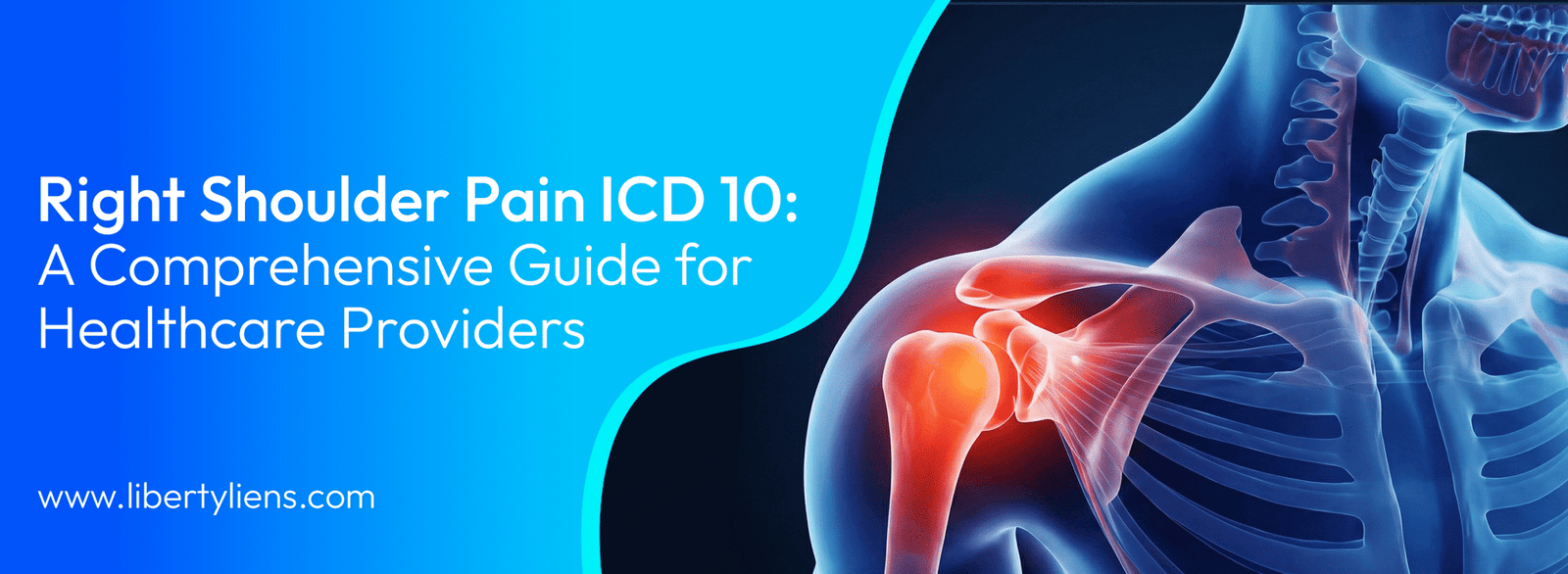
Right shoulder pain refers to discomfort, aching, or stiffness localized to the right shoulder joint, often impacting mobility and quality of life. While seemingly straightforward, the underlying causes of right shoulder pain can range from acute injuries to chronic degenerative conditions, making precise documentation and coding a critical component of patient care.
Symptoms
Patients with right shoulder pain may present with:
- Persistent aching or sharp pain in the shoulder joint
- Limited range of motion, particularly during overhead or rotational movements
- Swelling, redness, or tenderness in cases of acute injury or inflammation
- Referred pain to the neck, arm, or upper back
- Weakness or instability, potentially affecting daily activities
Causes and Risk Factors
Right shoulder pain can be caused by a wide range of conditions:
- Musculoskeletal Injuries: Rotator cuff tears, tendonitis, bursitis, or shoulder dislocations are common causes.
- Degenerative Conditions: Osteoarthritis or calcific tendinopathy may contribute to chronic pain.
- Repetitive Strain: Activities requiring repetitive arm movements, such as lifting or throwing, increase the risk.
- Systemic Conditions: Rheumatoid arthritis, infections, or metabolic disorders can occasionally present with shoulder pain.
- Postural and Ergonomic Factors: Poor posture, prolonged computer use, or incorrect lifting techniques can exacerbate discomfort.
Risk factors include age over 40, dominant-hand overuse, prior shoulder injuries, obesity, and certain occupations involving heavy physical labor.
Complications
If left untreated or poorly managed, right shoulder pain can lead to:
- Chronic pain and reduced functional capacity
- Decreased work productivity and activity limitations
- Secondary musculoskeletal strain due to compensatory movements
- Surgical interventions in severe cases
Diagnostic Criteria
Accurate coding begins with precise clinical documentation. Providers typically diagnose right shoulder pain through:
- Detailed patient history, including onset, duration, and precipitating factors
- Physical examination assessing tenderness, range of motion, and strength
- Imaging when indicated: X-rays, MRI, or ultrasound
- Differential diagnosis to rule out systemic causes
ICD-10-CM Structure
The ICD-10 code for right shoulder pain falls under M25.511 – Pain in right shoulder. Key points for understanding the structure include:
- M25: Diseases of joints
- .5: Pain in a joint
- 11: Specifies right shoulder, differentiating from left (M25.512) or unspecified (M25.519)
- Laterality Matters: Always specify right, left, or bilateral to ensure accurate coding
- Episode of Care: Acute versus chronic pain is not directly differentiated in this code, but may influence documentation and billing
For healthcare providers, understanding how laterality, episode of care, and specificity affect ICD-10 coding ensures accurate claims submission and reduces denials.
ICD-10 Classification and Code Structure for Right Shoulder Pain
The primary ICD-10 code for right shoulder pain is M25.511, which falls under the broader musculoskeletal classification system. Let’s break it down for clarity.
Code Breakdown
| Component | Meaning |
| M | Musculoskeletal system and connective tissue disorders |
| 25 | Other joint disorders, not elsewhere classified |
| .5 | Pain in the joint |
| 11 | Right shoulder |
When to Use M25.511
- Patient presents with localized pain in the right shoulder without a more specific underlying condition identified
- Pain is the primary complaint requiring medical attention
- No other code better describes a structural injury, such as a rotator cuff tear (S43.431A)
Providers should remember that M25.511 is a symptom-based code, not a definitive diagnosis of a structural disorder. When a specific underlying condition is identified, that diagnosis may replace the pain code.
Related ICD-10 Codes Used for Right Shoulder Pain
Right shoulder pain often overlaps with other musculoskeletal or systemic conditions. Understanding related ICD-10 codes helps providers code accurately and avoid reimbursement issues.
| ICD-10 Code | Description | When to Use |
| M25.512 | Pain in the left shoulder | When pain is localized to the left shoulder |
| M25.519 | Pain in the unspecified shoulder | Use if laterality is not documented |
| M75.100 | Unspecified rotator cuff tear of the right shoulder | When imaging confirms a tear, but the type is unspecified |
| M75.111 | Incomplete rotator cuff tear of the right shoulder | When a partial tear is diagnosed |
| M75.121 | Complete rotator cuff tear of the right shoulder | When imaging confirms a full-thickness tear |
| M75.51 | Bursitis of the right shoulder | When inflammation of the bursa is the primary issue |
| M19.011 | Primary osteoarthritis, right shoulder | When degenerative joint disease is identified |
Coding Considerations
- Secondary Codes: Pain codes like M25.511 can be used alongside structural diagnoses to document both symptom and underlying cause
- Unspecified Codes: Only use M25.519 if documentation lacks clarity, as payers may scrutinize unspecified codes
- Impact on Billing: Using the most specific code ensures correct reimbursement, reduces denials, and streamlines revenue cycle management
By maintaining clear documentation and selecting the most specific code, providers support both clinical accuracy and financial efficiency.
Documentation Tips for Healthcare Providers
Accurate coding for right shoulder pain relies heavily on detailed documentation. Providers should focus on:
- Specifying Laterality: Always indicate right, left, or bilateral to avoid unspecified code usage
- Describing Pain Characteristics: Include severity, duration, onset, and associated limitations
- Linking to Procedures: Connect M25.511 or other diagnosis codes with CPT codes for therapy, injections, or imaging
- Differentiating Acute vs Chronic: Note history of prior episodes or injuries
- Avoiding Ambiguity: Avoid using generic terms like “shoulder discomfort” without a clinical context
Practical Tips
- Templates and Checklists: Incorporate fields for laterality, onset, and pain specifics in EHR notes
- Provider Education: Regular training ensures all clinicians understand the impact of coding on revenue cycle management
- Cross-Reference CPT Codes: Confirm procedures match the diagnosis codes to prevent denials
- Audit and Feedback: Periodically review charts for completeness and specificity
Clear documentation strengthens medical billing, enhances denial management, and supports compliance with federal and payer guidelines.
Why ICD-10 Right Shoulder Pain Matters for Providers
The correct use of the right shoulder pain ICD 10 code affects several aspects of clinical practice and financial operations:
Medical Billing and Reimbursement
- Ensures claims are processed accurately and on time
- Reduces the likelihood of denials due to unspecified or incorrect codes
- Supports proper reimbursement for procedures such as physical therapy, injections, or imaging
Denial Management
- Specific coding helps identify claims at risk for denial
- Facilitates quick appeals with precise documentation
- Reduces administrative overhead and loss of revenue
Compliance and Revenue Cycle Management
- Accurate ICD-10 coding demonstrates adherence to federal and payer regulations
- Supports quality reporting initiatives and audits
- Enhances revenue cycle management by connecting clinical documentation to billing outcomes
Healthcare providers in specialties such as orthopedics, pain management, primary care, neurology, and physical therapy can particularly benefit from accurate ICD-10 coding. For example, an orthopedic clinic managing rotator cuff injuries or bursitis of the right shoulder can rely on precise ICD-10 documentation to justify therapy sessions, surgical interventions, and follow-up care.
How Liberty Liens Support Providers
For providers, partnering with a medical billing partner like Liberty Liens ensures seamless revenue cycle management. Liberty Liens specializes in medical billing, denial management, and revenue cycle services across multiple specialties, including:
- Orthopedic
- Pain Management
- Primary Care
- Home & Community Services
- Neurology
By leveraging Liberty Liens, providers can:
- Optimize reimbursement for right shoulder pain treatment
- Minimize denials with precise ICD-10 coding
- Streamline documentation processes for accurate medical billing
This allows clinicians to focus on patient care while maintaining financial efficiency and compliance.
Conclusion
Accurate coding of right shoulder pain with M25.511 is vital to ensure proper medical billing and reduce claim denials. By clearly documenting pain characteristics, laterality, and associated findings, healthcare providers can support medical necessity, optimize reimbursement, and strengthen revenue cycle management. Precise coding also improves compliance with payer and federal requirements, minimizes administrative burdens, and allows providers to track patient outcomes effectively.
Additionally, thorough documentation helps differentiate right shoulder pain from related musculoskeletal conditions, ensuring patients receive appropriate care while maintaining accurate records for audits or quality reporting. In today’s complex healthcare environment, taking the time to code and document right shoulder pain correctly not only protects practice revenue but also enhances patient safety and continuity of care. Ultimately, attention to detail in ICD-10 coding transforms routine documentation into a critical tool for both clinical and financial success.